Glenn Greenwald
Politics • Culture • Writing
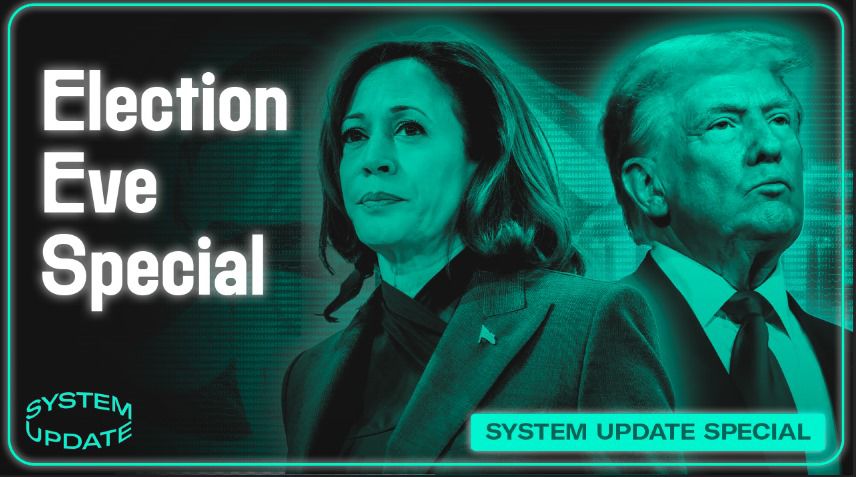
Election Eve Special With Michael Tracey, Briahna Joy Gray & Zaid Jilani
Video Transcript
November 06, 2024
post photo preview

Watch the full episode HERE

Podcast: Apple - Spotify 

Rumble App: Apple - Google


Good evening. It is Monday, November 4h.  I'm Michael Tracey, filling in once again for the enigmatic Glenn Greenwald, who is off doing something or other tonight. But we're going to have a jam-packed show for you because, as you might be aware, tonight is the eve of the 2024 presidential election, and therefore, there is much to discuss.  

I'm here in Lancaster County, Pennsylvania, where the poor citizens of Pennsylvania have been absolutely inundated with campaign propaganda for an interminable period of time at this point, and hopefully will soon receive some relief. But for now, welcome to a new episode of System Update starting right now. 


Pennsylvania, as everybody is tediously aware, is ground zero for the 2024 campaign. The amount of propaganda that everybody is being bombarded with in this state is astounding. It was probably similar in previous years, but now it just seems like it's reaching a new level. You cannot turn on the television without seeing five consecutive ads from politicians who are criticizing other politicians. It's just suffusing the entire commonwealth and people might kind of just not be inhabiting the same world if you live in, I don't know, Vermont or Arkansas or Kentucky or Massachusetts or some other place that's not seen as hotly contested in this election. It's obviously to do with the structure of the U.S. electoral system where we allocate electors by popular vote in individual states, and then whoever gets the majority in the Electoral College wins. Therefore, people pour into the states that are seen to be the most critical to winning the Electoral College. And here we are in Pennsylvania. 

I've been across the country covering the elections. I've been in Nevada, I've been in Arizona, I've been in Florida, Georgia, North Carolina and now here I am concluding the spirited and wonderful 2024 campaign season here. And tonight, I cap things off by just having gone to one of Donald J. Trump's final rallies. He could always, who knows, hold additional rallies if he wins or even if he loses, it's difficult to say, but at least as of this campaign cycle, one of his final rallies was this afternoon in Reading, Pennsylvania, spelled deceptively as ‘reading’ but all the locals know that it's pronounced Redding. 

So, make sure you have that down if you ever want to become a political prognosticator and discuss this particular micro section of Pennsylvania, the commonwealth. And there was an interesting occurrence at this Trump campaign rally that I was there to witness myself, where he gave a curious shoutout to a particular political ally of his. And so, let's play that clip of Donald Trump today at the rally in Reading, Pennsylvania. 


Video. C-SPAN. November 4, 2024.


Donald Trump: So normally you see all these jobs and everything, hundreds of thousands of jobs just because of the size. And they just announced, Mike, you'd be amazed at this, Mike. Look at our Mike. Look at that. He lost all that weight. You look so handsome. Stand up, Mike Pompeo. Stand up, Mike. He looks so handsome. Wow, man. I'm going to ask him how the hell did he do that? That's good. Good. That's great. 


I was sitting actually behind Pompeo further up in the in the arena style seating, and I saw him stand up. He waved to the crowd. Trump prompted the crowd to give Mike Pompeo a nice round of applause. One of the few people that Trump actually singled out for praise in this particular event. We've heard a lot one of the big Trump campaign themes is supposedly that he has this Avengers-style dream team of new people who are going to come into a second Trump administration and combat the deep state or bring peace and prosperity and justice to America. And I've always found this a bit odd because although people like Robert F. Kennedy Jr. and Tulsi Gabbard and others promote this kind of fairy tale, Mike Pompeo has always been one of the foremost people in the Trump coalition, the Trump governing coalition. He was one of the few senior-level administration officials in the first Trump administration with whom Trump never had a personal falling out. Trump first appointed Pompeo as CIA director and then elevated him to secretary of state, in which capacity Pompeo served for the majority of the Trump presidency and carried out dutifully their joint policy initiatives. 

One of those policy initiatives was to basically declare jihad against Wikileaks, which when Pompeo was CIA director, he called a hostile nonstate intelligence service and then directed the resources of the executive branch to combating and ultimately prosecuting in the form of Julian Assange, who, of course, was indicted in 2019 and then again with a superseding indictment in 2020, he was extracted from the Ecuadorian embassy in London and thrown into Belmarsh Prison, and only a few months ago was he finally released, under the Biden Department of Justice. Assange and his counsel arranged for a plea agreement that enabled him to leave prison and go back to Australia. So, people kind of try to assert that there's some fundamental disparity or incongruence between Trump and Pompeo. Yet Trump has been going around praising Pompeo. He told the radio host Hugh Hewitt recently that Pompeo is among the people who are in consideration for another senior-level role in his forthcoming administration, which would make perfect sense because he and Pompeo were in total harmony, as far as anybody could tell, while Trump was in power the first time. Trump even went on Joe Rogan and favorably name-dropped Pompeo and then now here Pompeo is going around in the Trump entourage, campaigning with him and getting called out by Trump as one of his favored backers. So, I mean, people can have this hallucinatory view of like what Trump might do because are they bought into this whole RFK Jr. mythology where because like RFK Jr. might have some ancillary role at the Food and Drug Administration with like removing toxins from oil supplies that therefore Trump is going to have this new group of like heroic superstars to dismantle the Deep State, Trump himself is telling you who is within his sphere of influence and who is within his orbit. It's Mike Pompeo. If you're a person who views yourself to be an enormous defender of Wikileaks – as I've always been since, I don't know, 2009, 2010 – when they first became prominent in American domestic politics and international affairs as well, then it's just a massive bit of cognitive dissonance to be cheerleading for Donald Trump when he's telling you blatantly that Mike Pompeo is still in his good graces. Mike Pompeo also spoke at the Republican convention. I mean, this is not hidden. It's coming out of Donald Trump's own mouth.

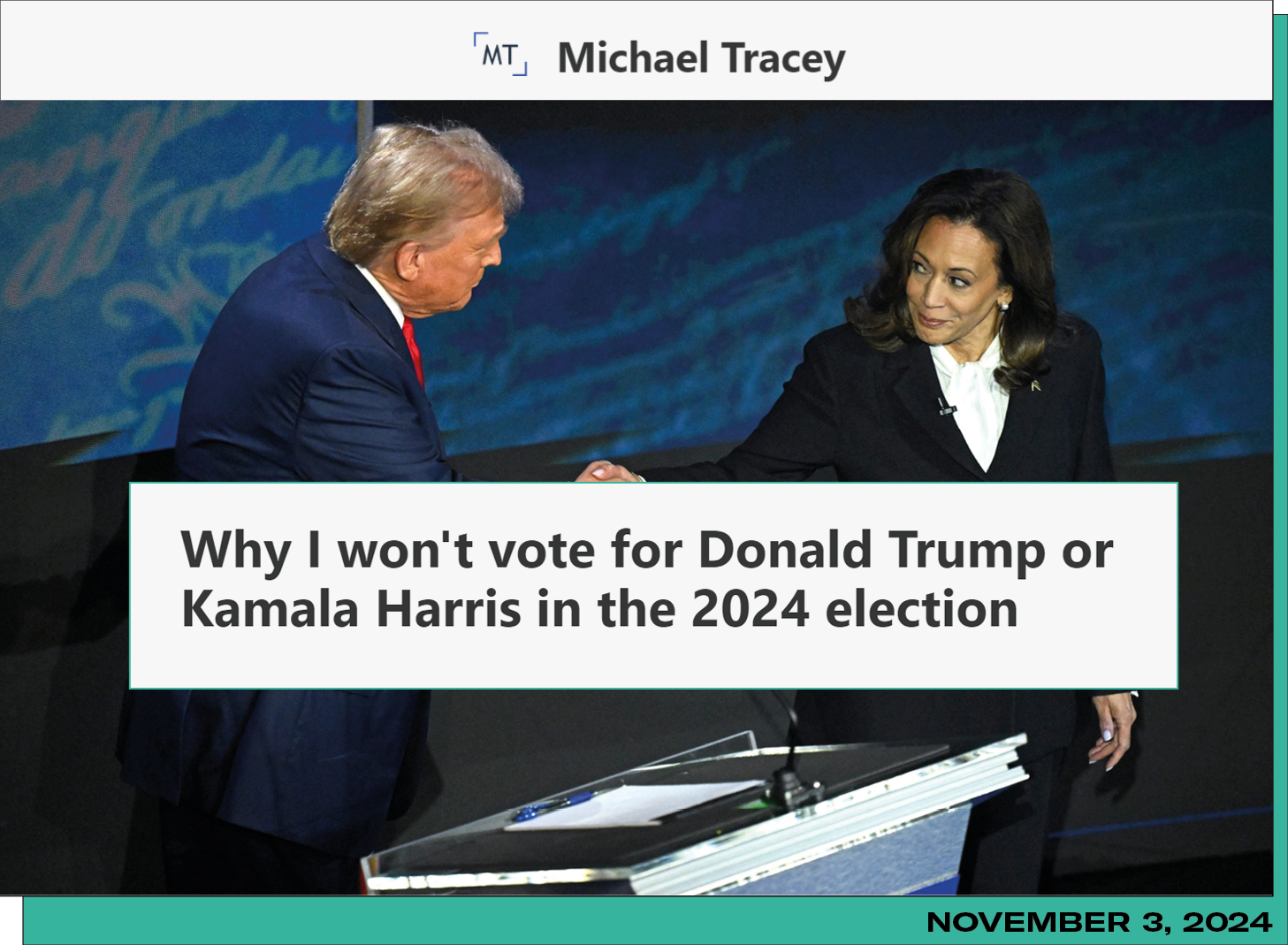
If people want to employ some kind of circuitous reasoning and still claim that it's of urgent moral necessity to reinstate Republican executive power, okay, that's your prerogative, but at least go into it with some clarity as to what you're doing. You know, I didn't vote for either Kamala Harris or Donald Trump – not that anybody should particularly care about my own voting behavior, but I do think it's worthwhile to be at least transparent about what I've done. I've never bought into this whole taboo that certain journalists have where you're supposed to steadfastly conceal your own private political activity or voting behavior. That never made sense to me. And I wrote out a whole explanation of why I did this. This was an interesting thought, that people could look it up if they'd like, it was published over the weekend. 
AD_4nXdEJ_BfW6t1imNuIclwxBEmNKevp47kk-hDnOLMbZ2JxFZTV0k3tJYJt1xGySeTG4d1_3WBHCW9eoCPYdm98zvXmUzZB8U5KDdprnN3fESLiIjAgR8LEcSojmRcDBmaR_q0GITgrJwmW69Z1qZH6g5ZkA_HfGEdCjw_YQm0Zw?key=2-mmG9WhgpXSvyTMdsG5fLlz

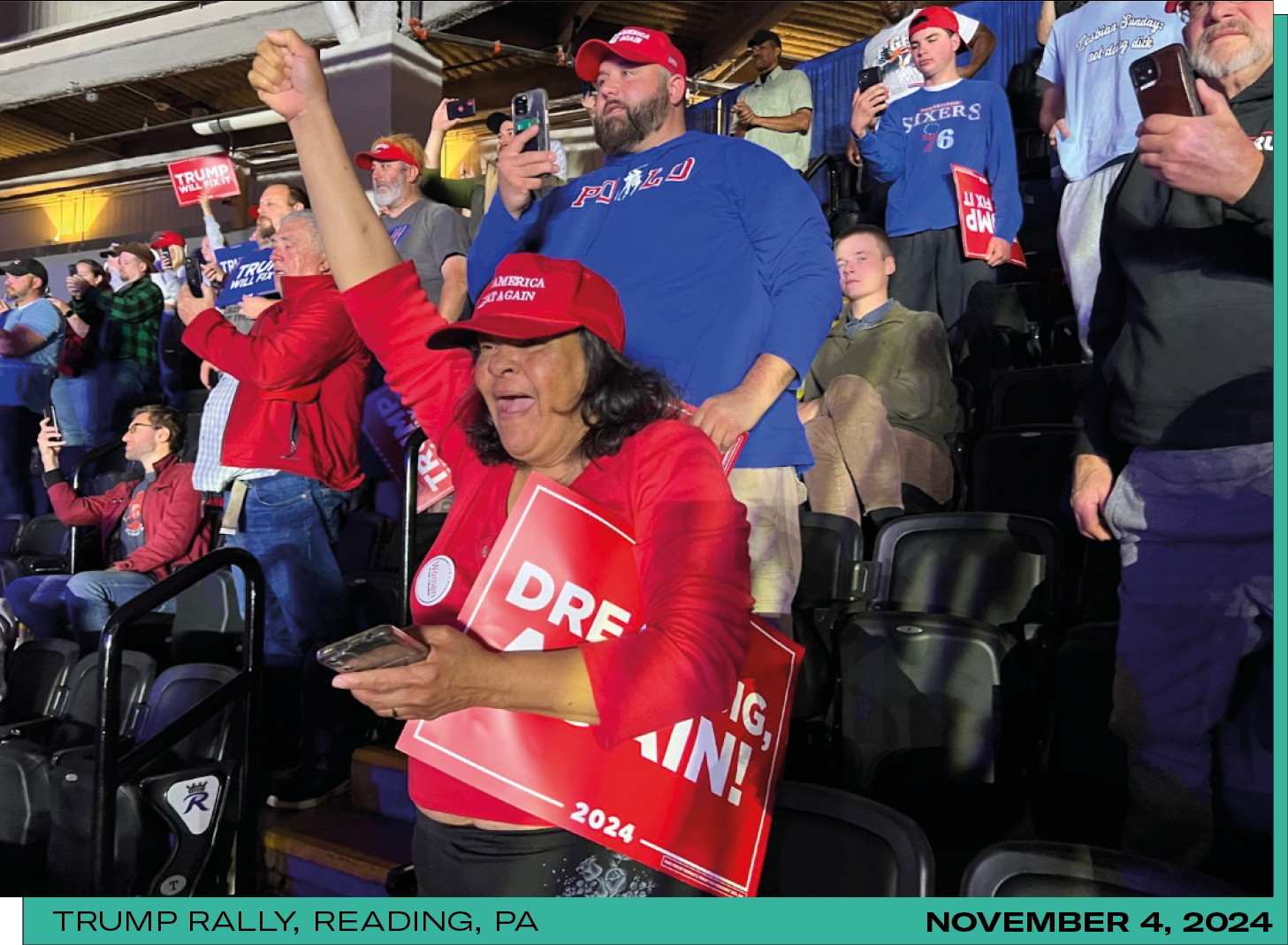
But one thing that I am trying to do is call attention to the legions, the tens of millions of nonvoters who are constantly berated and hectored and lectured and scolded for not voting for one of the two major party candidates. Either they're voting third party or not voting at all, which I think is a perfectly valid position for people who are abstaining from the electoral process because they don't wish to concede that it has any legitimacy in their eyes. And there are so many voters across Pennsylvania. Before I get on to this, I do want to ask the producers to throw up the photo of the woman at the Trump rally who was sitting behind me. She was a Spanish-speaking woman. 
AD_4nXe1yz5-qh_NyhfE93OCESX2Qk_OHylrA-LlMohiO5bMpU9Eo9pxZRps5gceqyPma6uHXUB58llvnYWWyxhO1anEZiJSy90Ya3VOMvKSTuvd_zH9Y0J6sSe87ocJQWIYE3lTD-7Lhlb9wnoWY83eRsKjFF3LzeHcNDVL6aic2Q?key=2-mmG9WhgpXSvyTMdsG5fLlz

And before I get on to my larger point, I just do want to point out that if you go and sit at one of these Trump rallies, I mean, Reading, Pennsylvania, is heavily Latino and there were lots of people who were cheering when Marco Rubio – supposedly one of the former neocons, quote-unquote, who has been banished from the Republican Party under Trump but who is still also within the Trump sphere of influence, just like Tom Cotton, who is also sitting in the VIP section at this rally today, but, you know, I say too much in this regard, I guess, for some people. But I do want to point out, just like the very clear diversity in the demographics that are supporting Trump this time around, I mean, I think it's very much probable, almost even certain that Trump will receive a heavily diversified vote racially, ethnically and religiously tomorrow, probably superseding or exceeding the racial diversity of his vote in 2020 and 2016. And if anything, he might be going down with white voters overall, mostly highly educated white voters. If Trump does lose, it'll probably look something like college-educated white voters trending against him just as happened between 2016 and 2020. And it's not offset sufficiently by the increased level of support from racial minorities that he receives, including that woman who happened to be behind me at the rally. And there were lots of other diverse people at this rally. So, I mean, it cuts right against this fanciful idea that Trump is leading some sort of, quote, “Nazi” movement. I mean, it doesn't seem to include all that much of an appeal to, like racial purification zealotry if you're including within the current iteration of the mock a movement of very visibly diverse set of people. 

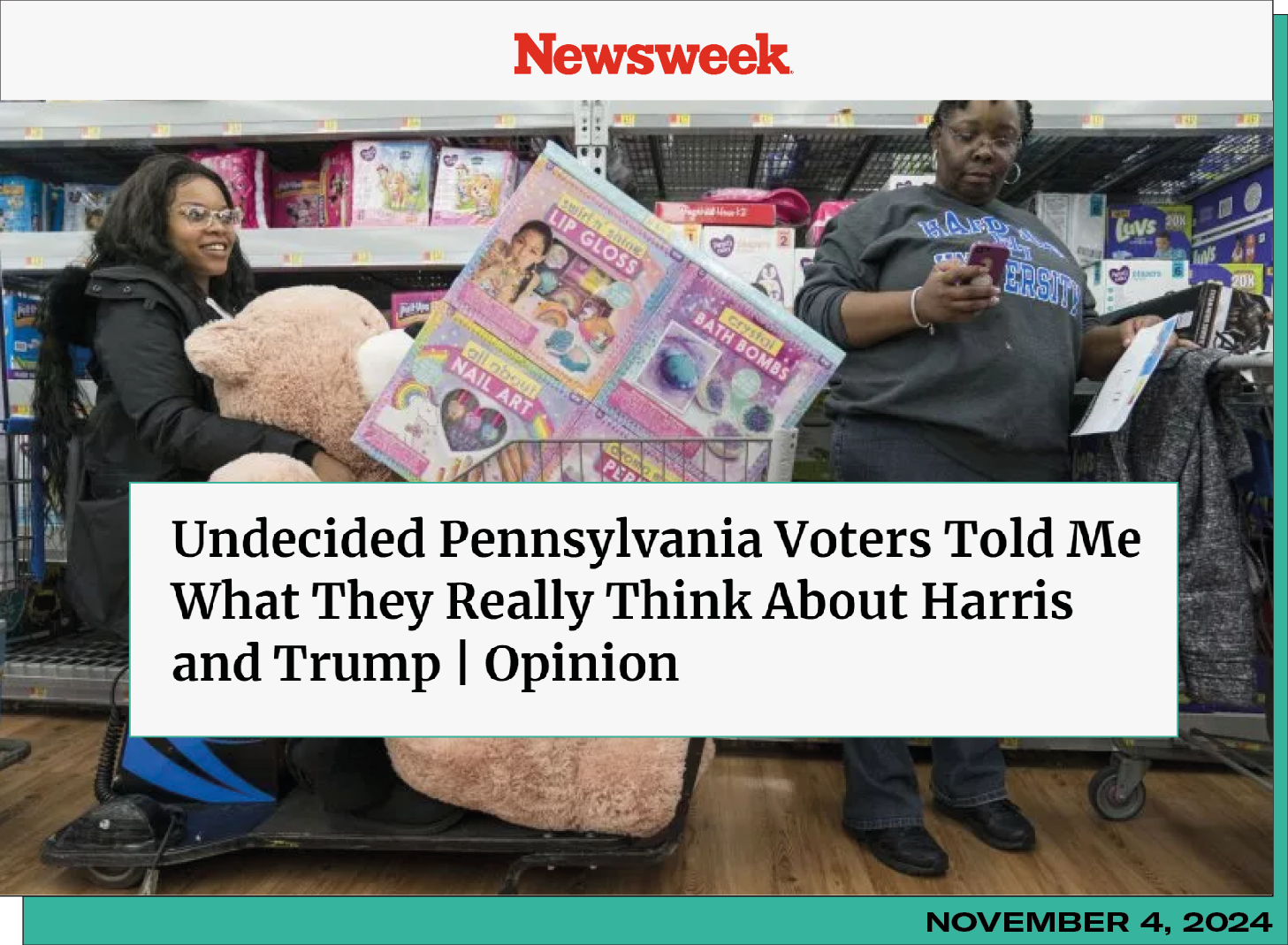
But anyway, the undecided voter I think is very interesting. I also wrote today an article for Newsweek where I went and surveyed lots of undecided voters in Pennsylvania and people, I think, have a misconception about what the prototypical undecided voter is this late in the election cycle. It's really not a voter who is determined to vote and is still trying to make his or her mind up between Kamala Harris and Donald Trump. Those voters do exist. I mean, you would never know it if you look at Internet comment sections all day, but that title does exist. 
AD_4nXfsNvmDjgBUBFpI3QECNFmKNqyTO9KVj0PtvimMDBJPDJvxox8AsXdUBV5LBvOeKUrpVrGcHNF5ggXZtB2WVqHi6L9S_e3mRC4t74tBpa-JWbgPnKmKmhL_iqLAbju9l_Lxic6nBAt6qr0dgHs1lO-UNScd4hfG71wo7E3EMA?key=2-mmG9WhgpXSvyTMdsG5fLlz

But more often what you encounter are people who are undecided voters in the sense that they don't know whether it's even worth their time to go vote at all. They tend to have a disenchanted idea of the electoral process as a whole, skeptical toward the two major candidates, they might be more favorable toward one or the other, but the decision point that they've yet to complete in their thought process is whether to even vote at all. And interestingly, a number of these people if they were prodded, if they were maybe targeted by a competent Republican, get-out-the-vote operation – which we're told Elon Musk is funding in Pennsylvania, remains to be seen whether that's going to be effective – but I encountered more often than not among this like basket of voters who are undecided about whether to vote, more often – again, I grant this is anecdotal, but like, what else can I do in terms of conducting reportage than compiling anecdotes? – more often than not, these people who are undecided about whether to vote, they have like a preference for Trump. So, they could be amenable to motivational interventions on the part of some Republican apparatus to try to get them out to vote, to encourage them to be motivated enough to go act on their preference. But so far, they haven't been reached in that way, at least from what I have been able to gather in my sample size. So, it's 25 people and there are a lot of people who reflect this kind of profile. 

Yesterday I was out across different parts of most like Philadelphia suburbs, with Meghan O'Rourke, who is a producer here on the System Update show and we were just going to do Man-on-the-Street interviews. Sometimes people can kind of maybe snicker at the utility of conducting this kind of interview, but they're really pretty informative, I find, because you're kind of just doing a random sample of voters. I particularly wanted to see if we could identify nonvoters. People who are abstaining from the election, whether out of pure apathy, out of distaste for the two candidates, or for any other reason because I think that those segments of voters are under-analyzed. 

But first, I want to show you a clip of an interview that we did with a person who really reflects why I think more people should do more On-the-Street interviews because you're bound to encounter a voter or a would-be voter who just defies any stereotypical expectation you might have. So, let's go to the interview that we did with the young woman who was a Walmart worker. 


Video. Walmart employer. Norristown, PA.


M. Tracey: Yeah. So, what do you think about the election coming up? 


Interviewee: I think this election is very important this time. It's a lot going on, so we need a good president, you know? And I think Trump will be a good president, in my opinion, because he's actually done stuff in the office. I haven't really seen the vice president like really do anything, even though being vice president. Yeah. So, I just feel like a guy being a president is better in my opinion. 


M. Tracey: Really? 


Interviewee: Yes. 


M. Tracey: Explain. 


Interviewee: I feel like… What's her name? 


M. Tracey: Kamala. 


Interviewee: I feel like if Kamala was president, I feel like we will be in war with, like, other countries, because she will, like, I don't know. Females are very sensitive. 


M. Tracey: Wow. What do you like that Trump did when he was in office the first time? 


Interviewee: I can't remember. Okay. I know he did something. Some stuff. Like people said, I don't like Trump, but like, they have to understand, like he did do stuff while he was in office. 


I just wanted to play that, not because it's necessarily totally representative of anything in particular, but because you encounter all these amazing anecdotal stories about how people formulate their political views. And as somebody who covers politics for better or worse, day in and day out, you can kind of get into certain patterns or rhythms in terms of how you kind of just assume that the electorate is shaping up. And, you know, we came across a Walmart worker. She was actually 17, okay, but she was working at Walmart, so, she's not eligible to vote this year. But she says her family is all voting for Trump. She wants Trump to win. She has some striking views as to whether a woman should be in office and know she's a young Black woman who's a low-wage worker at Walmart and supporting Trump. So, I just throw that out there to say that there are so many manifestations of the voter that I think you only really encounter if you go out into the wild and just kind of talk to a random selection of people, get off the Internet. Not that the Internet is totally useless, but in terms of, you know, encountering people who are kind of out to defy your expectations as to how people arrive at their political preferences, it's useful to go out and talk to people. 

So, I had the bright idea of going to Walmart because I think that's sort of an instructive place to kind of talk to people who may be undecided or less engaged in the political process and yes, let's play that other interview that I did with the second woman at Walmart with her son. 


Video. Mother and son at Walmart. Norristown, PA.


M. Tracey: So, you said you have not really been following the election much at all. What do you know? To the extent that you know anything?  


Mother: I know that there is Kamala Harris and I know Donald Trump. Yes. 


Son: And I know the perfect pick. 


Mother: And he knows who he would pick. 


M. Tracey: Who would you pick? 


Son: Kamala Harris.


M. Tracey: Why is that?


Son: I don't trust Trump. I just don't trust Trump. I never trusted him. 


M. Tracey: What don't you like about Trump in particular? Like anything he did when he was president the first time that you didn't like? 


Son: No, I don't think I noticed anything yet. (talks to his mother)


Mother: You were young, you were just young. 


M. Tracey: How old are you? 


Son: Nine. 


M. Tracey: Okay. So, at the end of Obama and then Trump came in. 


Mother: Yup. 


M. Tracey: And what do you like about Kamala, if anything? 


Son: I don't know. I just… 


M. Tracey: You just like her as an alternative to Trump? 


Son: Yes. 


M. Tracey (To mother): And you just haven’t been following it. 


Mother: I just haven't really been following. I didn't have any problems when Trump was in. I thought he was fine before. But I don't really know who's doing what this year. Like who's, you know, what everybody's talking about. I just really don't keep up. 


M. Tracey: Have you voted in the past? 


Mother: I have not ever. Never in my life. 


M. Tracey: And why? You just don't think that there's enough at stake for you to… 


Mother: It's not that, I just... I just never have. I really never have. But if I had to pick one, I would go back to Trump. 


M. Tracey: Really? 


Mother: Just because he did fine before. Like, I just think I would choose him. That's it. 


I played that because she's obviously an infrequent voter – she has never voted – but she's saying that she has a preference for Trump. So, this is like the prototypical, modal voter that the get-out-the-vote operations that are run by both parties would want to identify and then try to urge or motivate to vote and it doesn't seem like that's happened with her. I can give you a bunch of other examples of people who fit a similar profile. 

One of my tentative theories here is that there is a fairly sizable untapped pool or voters who could lean Republican. My basic theory is that there does appear in Pennsylvania and other states to be a large, an untapped or seemingly untapped pool of potential Trump or Republican voters who need a bit of extra motivation given their skepticism of the system or their low propensity to vote at all, who could potentially be motivated to vote if they were made contact with by a get-out-the-vote operation. But the Republicans historically have not been as competent at utilizing get-out-the-vote methods as Democrats and so, if Trump does lose Pennsylvania, well, a large share of the reason will be that voters such as this have not been contacted, persuaded or engaged with by these well-funded billionaire-funded groups. So we're told, you know, we're flooding the state with ads, but apparently don't have the wherewithal to identify this type of voter, again, who says that she would prefer Trump but is just not interested enough in the election to go vote.


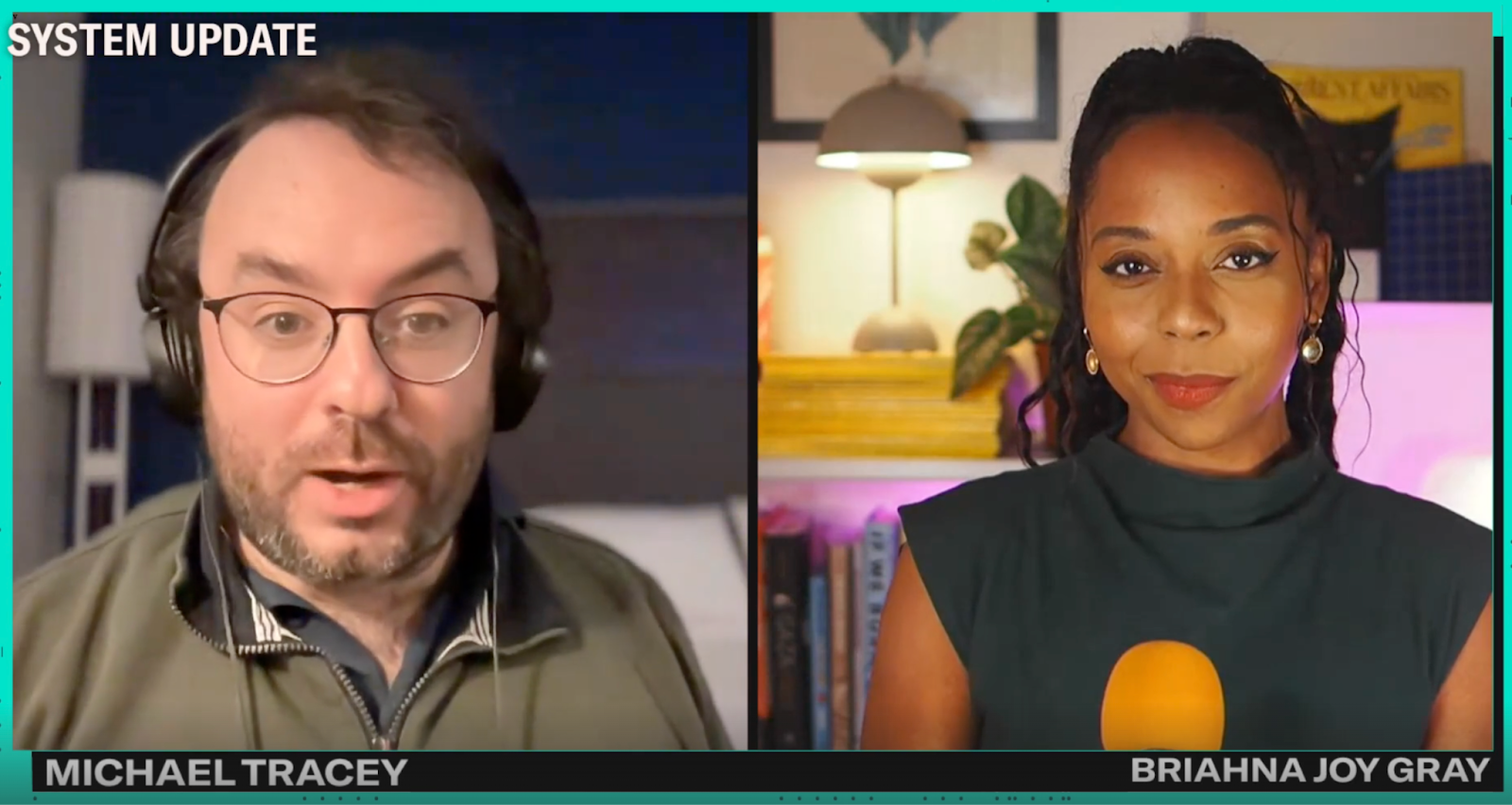
 Okay, so, now we're with Briahna Joy Gray. 


Interview: Briahna Joy Gray 
AD_4nXdgyFHIWMSJ1IMJS9XpWQVQQpr5f9FuF6EudfETwsQh2Md5VUjmrs3CZAS_wUCQyefuwpPKdl1TkB-Nsko7DUEcosaMqvvnOmHRuonkZfv3XgTHLxZwRjysQShCaJgSUw7MOiUtPfIcf1hEaQxRbkMbcYirT_PblQt2IwEt-g?key=2-mmG9WhgpXSvyTMdsG5fLlz

M. Tracey: So, Brianna, I wanted to talk to you for a while because obviously we're on, as you may be aware, the eve of the 2024 election, there could be some people out there who are still making up their minds. I would doubt that there are that many watching System Update and Rumble who are undecided, but you never know. 

One thing that I've noted, having gone around and surveyed undecided voters here in Pennsylvania, which is ground zero for an endless bombardment of propaganda – it's actually incredible, I mean, I know this happens every election cycle to some extent, especially post-Citizens United, which basically eliminated all constraints on political spending. But it really is incredible to see just how inundated Pennsylvanians are – I've talked to a lot of Pennsylvania voters who are undecided, partially because they're so alienated from all the endless propaganda that they're being bombarded with, that they kind of just are contemplating potentially not even voting out of spite. And I sympathize with that. 

So, did you get a chance to look at any of the articles that I sent you? I'm trying to basically postulate a certain type of undecided voter who exists out there in the universe who I think is under-examined and it's not somebody who's like making this a last minute impulsive decision between Donald Trump and Kamala Harris. Most people who are determined to vote already have make up their minds. Those are the quintessential undecided voters. The undecided voters that I most encounter here in Pennsylvania and also around the country are people who are disenchanted with the electoral process. And they may have a mild preference for one or the other. Interestingly enough, they tend to express more of a preference for Trump in my experience but they might not be motivated to actually go and bother to vote. They don't think it particularly matters. 


Briahna Joy Gray: That doesn't surprise me at all. I mean, we do this every election cycle, right? What is the stat about there being more nonvoters than Americans who identify with either political party, record high numbers of people who identify as independents, right? And that is largely because people start to get to a certain age, it only takes a few election cycles to start to get the sense that no matter who's sitting in the Oval Office, your life is substantively the same. Now, I'm not going to sit here and say that there aren't meaningful differences that come around on a generational basis, that there are meaningful differences in terms of the labor conditions that people have to organize under, or, let's say, Roe (v. Wade) being overturned. But realistically speaking, practically speaking, for most people's lives, the consequences of organizing under Biden's Labor Department being better, it is meaningful, at the same time, fewer than 10% of Americans are in unions, and those numbers have not meaningfully dropped, despite the fact that we have a more pro-labor president in office. And again, that is not to say to diminish those gains. But the fact is, when you have wins that touch the lives, directly touch the lives of so few Americans, you find yourself facing a lot of disaffected voters. 

There are policies that have the potential to touch a lot of people in one fell swoop. Remember, Biden's announced student debt policy was going to affect 44 million Americans, 44 million Americans who are going to get $10,000 to $20,000 of their student debt canceled. Remember that. Remember how impactful the $1,200 checks were back in the early days of COVID. There are voters today still, I'm sure you encountered some of them, who will invoke those checks as long ago as they were, as some of the most meaningful interventions from a government they've ever experienced in their life. And yet Democrats have a tendency to, I would argue, purposefully avoid, but even if you're giving them the benefit of the doubt, set up their agenda, their policy, and did that strive more for small incrementalism, instead of the sweeping programs that I think could really win devoted, committed members of the base for many, many cycles going forward. And then the last point on that, I'd say that's Pennsylvania-specific. It's notable that fracking and Kamala Harris's flip-flopping on a fracking ban has been such a point of contention. She's seemingly willing to completely revise her 2019, and 2020 stance. Why? Well, there are only about 17,000 fracking jobs in the entire state of Pennsylvania. In fact, a majority of Pennsylvania voters are supportive of the fracking ban and are deeply concerned about the health implications of having to drink this luminous light-on-fire water that fracking creates. On the other hand, had she wanted to touch again tens of thousands of Pennsylvania voters, she could have focused on the fact that Pennsylvania voters are still operating under a federal minimum wage. That's the federal minimum wage that hasn't been raised since 2009, the longest period in American history since we've had a minimum wage. And then email. There are tens of thousands of minimum wage workers in Pennsylvania who are still on the federal minimum wage rate, you barely hear a peep out of the Democratic Party, about a $15-hour minimum wage, which isn't some far-fetched lefty agenda item. It's a core base item on the Democratic agenda. So, what is really going on here? It feels like many voters are increasingly disaffected because the Democratic Party is pitching their pitch to their donor base who care about things like a fracking ban, the energy companies, the defense contractors, and the like, instead of actually talking to the voters whose votes they need. 


M. Tracey: And look at who Kamala Harris is clearly tailoring her message to in the final weeks of her campaign. It's still bizarre to me to even utter this out loud, but it really is centered on Liz Cheney and disaffected, highly engaged, news-attentive Republicans who Kamala Harris apparently wagers that she'll be able to convince to come and vote for the Democrat. I don't know for sure that that is an impossibly crazy strategy. It certainly didn't work in 2016 for Hillary Clinton when she employed a version of it but you could argue perhaps that it might have worked to some extent for Biden in 2020. It's hard to say. I mean, Biden did largely win in the contested states because of major shifts within affluent suburbs, whereas the city centers like Philadelphia or Detroit or Milwaukee, actually trended marginally toward Trump. But that was offset by the major gains that the Democrats made in these affluent suburbs, which are increasingly, increasingly at the forefront of their electoral coalition. 

So, there's been a ton of energy expended on this show and other shows in the so-called alternative media ecosystem in dismantling the Democrats. And I'm always all for that. Okay? I can never get enough of it and I support Trump's principles but I do want to talk about Donald Trump, because one thing that's so maddening to me about this election cycle – and I spelled out in the other article that I wrote about my non-votes in the 2024 election – is that I consider myself, to some extent, a part of alternative media. I think it's a necessary corrective and has been a necessary corrective to the propagation of mainstream narratives and opening opportunities for people who might not have a traditional route to conduct journalism or engage in the media but I'm sorry to say – and people are going to get angry at me for saying this, who are watching – but a lot of alternative media this cycle has basically just been converted into a Republican cheerleading squad. I mean, Donald Trump can hand-pick “whatever podcaster, bro guy” – and I don't even say that derogatorily, I watch some of these podcasts – who he can go and banter with for an hour and a half and they won't ask him a single challenging question. And the list goes on. I mean, there are people who, you know, I would have had a much more respectable opinion a year or two ago who decided that their proper role in the 2024 election was basically just to join the Trump bandwagon. And if you want to vote for Trump, okay, fine but let's actually do some serious critique of his record, of his policy positions and it's just been virtually missing in these alternative media spheres, as far as I could tell. 

I don't know if you watch any of my introduction, but I happen to be at one of the final Trump rallies today in Reading, Pennsylvania. He pointed to Mike Pompeo, who was there in the Trump entourage, camped out on the campaign trail with Trump today, said what a great guy he is. He said on multiple occasions that Mike Pompeo was one of the people who is in consideration for another senior-level administration position. And for all we want to, you know, bemoan the Democrats relying on Dick and Liz Cheney, what's the substantive difference, really, between Trump parading around with Mike Pompeo? 

Tom Cotton was also there, one of the most virulent hawks in the entire Senate. Marco Rubio was in the entourage today. Lindsey Graham is a top surrogate. None of these people have been cast out of the so-called RFK Jr. reformed MAGA Republican Party or MAGA Party. I just think that there's such a torrent of confusion around this and a lack of serious critical examination that I sort of sometimes worry that the overwhelming focus that I have often partaken in, in criticizing and scrutinizing the Democrats has given way to the Trump and the Republicans, at least in these alternative media circles, kind of give being given a free pass. And there's just a flood of propaganda being repeated that is flattering to them without actually examining the record or what they would do a second time. So, am I crazy here? 

Only for Supporters
To read the rest of this article and access other paid content, you must be a supporter
1
What else you may like…
Videos
Podcasts
Posts
Articles
Lindsey Graham: Senator from Tel Aviv

New video: Glenn discusses Sen. Lindsey Graham's (R-SC) extreme devotion to Israel.

00:18:06
The NYT Performs Loyal Stenography—Masquerading as Journalism—to Protect AOC

The New York Times dutifully protected AOC after her disastrous interview flop at the Munich Security Conference, watch Glenn's reaction here:

00:31:25
AOC Makes Her Big Foreign Policy Debut, Falls Flat on Her Face
00:23:22
Listen to this Article: Reflecting New U.S. Control of TikTok's Censorship, Our Report Criticizing Zelensky Was Deleted

For years, U.S. officials and their media allies accused Russia, China and Iran of tyranny for demanding censorship as a condition for Big Tech access. Now, the U.S. is doing the same to TikTok. Listen below.

Listen to this Article: Reflecting New U.S. Control of TikTok's Censorship, Our Report Criticizing Zelensky Was Deleted
Good news about your Locals membership and our move to Substack

Dear Locals members:

We have good and exciting news about your Locals membership. It concerns your ability to easily convert your Locals membership to SYSTEM UPDATE into a Substack subscription for our new page, with no additional cost or work required.

As most of you know, on February 6, we announced the end of our SYSTEM UPDATE program on Rumble, or at least an end to the format we’ve used for the last 3 years: as a live, nightly news program aired exclusively on Rumble.

With the end of our show, we also announced that we were very excited to be moving back to Substack as the base for our journalism. Such a move, we explained, would enable us not only to continue to produce the kind of in-depth video segments, interviews, and reports you’ve grown accustomed to on SYSTEM UPDATE, but would also far better enable me to devote substantial time to long-form investigations and written articles. Our ability at Subtack to combine all those forms of journalism will enable (indeed, already is enabling) us to ...

Super article, one of his best. Excellently persuasive. Thanks Glenn!

I am going to pick a quotation that has a pivotal focus for the reading:

”(oil is often cited as the reason, but the U.S. is a net exporter of oil, and multiple oil-rich countries in that region are perfectly eager to sell the U.S. as much oil as it wants to buy)”

There is another argument that states that it is to prevent Iran from selling oil to China. So then there is the question, that if Iran only agreed to not sell oil to China, would we still be on the brink of a new war with Iran?

There is also the question of how much money does it cost simply to transport all that military hardware to that region in order to “persuade” Iran and then if Trump decides to return all that military hardware back to home base how much is that cost in addition to the departure journey?

https://open.substack.com/pub/greenwald/p/the-us-is-on-the-brink-of-a-major?r=onv0m&utm_medium=ios

NEW: Message from Glenn to Locals Members About Substack, System Update, and Subscriptions

Hello Locals members:

I wanted to make sure you are updated on what I regard as the exciting changes we announced on Friday night’s program, as well as the status of your current membership.

As most of you likely know, we announced on our Friday night show that that SYSTEM UPDATE episode would be the last one under the show’s current format (if you would like to watch it, you can do so here). As I explained when announcing these changes, producing and hosting a nightly video-based show has been exhilarating and fulfilling, but it also at times has been a bit draining and, most importantly, an impediment to doing other types of work that have always formed the core of my journalism: namely, longer-form written articles and deep investigations.

We have produced three full years of SYSTEM UPDATE episodes on Rumble (our premiere show was December 10, 2022). And while we will continue to produce video content similar to the kinds of segments that composed the show, they won’t be airing live every night at 7:00 p.m. Eastern, but instead will be posted periodically throughout the week (as we have been doing over the last couple of months both on Rumble and on our YouTube channel here).

To enlarge the scope of my work, I am returning to Substack as the central hub for my journalism, which is where I was prior to launching SYSTEM UPDATE on Rumble. In addition to long-form articles, Substack enables a wide array of community-based features, including shorter-form written items that can be posted throughout the day to stimulate conversation among members, a page for guest writers, and new podcast and video features. You can find our redesigned Substack here; it is launching with new content on Monday.

For our current Locals subscribers, you can continue to stay at Locals or move to Substack, whichever you prefer. For any video content and long-form articles that we publish for paying Substack members, we will cross-post them here on Locals (for members only), meaning that your Locals subscription will continue to give you full access to our journalism. 

When I was last at Substack, we published some articles without a paywall in order to ensure the widest possible reach. My expectation is that we will do something similar, though there will be a substantial amount of exclusive content solely for our subscribers. 

We are working on other options to convert your Locals membership into a Substack membership, depending on your preference. But either way, your Locals membership will continue to provide full access to the articles and videos we will publish on both platforms.

Although I will miss producing SYSTEM UPDATE on a (more or less) nightly basis, I really believe that these changes will enable the expansion of my journalism, both in terms of quality and reach. We are very grateful to our Locals members who have played such a vital role over the last three years in supporting our work, and we hope to continue to provide you with true independent journalism into the future.

— Glenn Greenwald   

Read full Article
post photo preview
The Epstein Files: The Blackmail of Billionaire Leon Black and Epstein's Role in It
Black's downfall — despite paying tens of millions in extortion demands — illustrates how potent and valuable intimate secrets are in Epstein's world of oligarchs and billionaires.

One of the towering questions hovering over the Epstein saga was whether the illicit sexual activities of the world’s most powerful people were used as blackmail by Epstein or by intelligence agencies with whom (or for whom) he worked. The Trump administration now insists that no such blackmail occurred.


Top law enforcement officials in the Trump administration — such as Attorney General Pam Bondi, FBI Director Kash Patel, and former FBI Deputy Director Dan Bongino — spent years vehemently denouncing the Biden administration for hiding Epstein’s “client list,” as well as concealing details about Epstein’s global blackmail operations. Yet last June, these exact same officials suddenly announced, in the words of their joint DOJ-FBI statement, that their “exhaustive review” found no “client list” nor any “credible evidence … that Epstein blackmailed prominent individuals as part of his actions.” They also assured the public that they were certain, beyond any doubt, that Epstein killed himself.


There are still many files that remain heavily and inexplicably redacted. But, from the files that have been made public, we know one thing for certain. One of Epstein’s two key benefactors — the hedge fund billionaire Leon Black, who paid Epstein at least $158 million from 2012 through 2017 — was aggressively blackmailed over his sexual conduct. (Epstein’s second most-important benefactor was the billionaire Les Wexner, a major pro-Israel donor who cut off ties in 2008 after Epstein repaid Wexner $100 million for money Wexner alleged Epstein had stolen from him.)


Despite that $100 million repayment in 2008 to Wexner, Epstein had accumulated so much wealth through his involvement with Wexner that it barely made a dent. He was able to successfully “pilfer” such a mind-boggling amount of money because he had been given virtually unconstrained access to, and power over, every aspect of Wexner’s life. Wexner even gave Epstein power of attorney and had him oversee his children’s trusts. And Epstein, several years later, created a similar role with Leon Black, one of the richest hedge fund billionaires of his generation.


Epstein’s 2008 conviction and imprisonment due to his guilty plea on a charge of “soliciting a minor for prostitution” began mildly hindering his access to the world’s billionaires. It was at this time that he lost Wexner as his font of wealth due to Wexner’s belief that Epstein stole from him.


But Epstein’s world was salvaged, and ultimately thrived more than ever, as a result of the seemingly full-scale dependence that Leon Black developed on Epstein. As he did with Wexner, Epstein insinuated himself into every aspect of the billionaire’s life — financial, political, and personal — and, in doing so, obtained innate, immense power over Black.


The recently released Epstein files depict the blackmail and extortion schemes to which Black was subjected. One of the most vicious and protracted arose out of a six-year affair he carried on with a young Russian model, who then threatened in 2015 to expose everything to Black’s wife and family, and “ruin his life,” unless he paid her $100 million. But Epstein himself also implicitly, if not overtly, threatened Black in order to extract millions more in payments after Black, in 2016, sought to terminate their relationship.


While the sordid matter of Black’s affair has been previously reported — essentially because the woman, Guzel Ganieva, went public and sued Black, accusing him of “rape and assault,” even after he paid her more than $9 million out of a $21 million deal he made with her to stay silent — the newly released emails provide very vivid and invasive details about how desperately Black worked to avoid public disclosure of his sex life. The broad outlines of these events were laid out in a Bloomberg report on Sunday, but the text of emails provide a crucial look into how these blackmail schemes in Epstein World operated.


Epstein was central to all of this. That is why the emails describing all of this in detail are now publicly available: because they were all sent by Black or his lawyers to Epstein, and are thus now part of the Epstein Files.


Once Ganieva began blackmailing and extorting Black with her demands for $100 million — which she repeatedly said was her final, non-negotiable offer — Black turned to Epstein to tell him how to navigate this. (Black’s other key advisor was Brad Karp, who was forced to resign last week as head of the powerful Paul, Weiss law firm due to his extensive involvement with Epstein).


From the start of Ganieva’s increasingly unhinged threats against Black, Epstein became a vital advisor. In 2015, Epstein drafted a script for what he thought Black should tell his mistress, and emailed that script to himself.


Epstein included an explicit threat that Black would have Russian intelligence — the Federal Security Service (FSB) — murder Ganieva, because, Epstein argued, failure to resolve this matter with an American businessman important to the Russian economy would make her an “enemy of the state” in the eyes of the Russian government. Part of Epstein’s suggested script for Black is as follows (spelling and grammatical errors maintained from the original correspondents):


you should also know that I felt it necessary to contact some friends in FSB, and I though did not give them your name. They explained to me in no uncertain terms that especially now , when Russia is trying to bring in outside investors , as you know the economy sucks, and desperately investment that a person that would attempt to blackmail a us businessman would immeditaly become in the 21 century, what they terms . vrag naroda meant in the 20th they translated it for me as the enemy of the people, and would e dealt with extremely harshly , as it threatened the economies of teh country. So i expect never ever to hear a threat from you again.


In a separate email to Karp, Black’s lawyer, Epstein instructs him to order surveillance on the woman’s whereabouts by using the services of Nardello & Co., a private spy and intelligence agency used by the world’s richest people.


Black’s utter desperation for Ganieva not to reveal their affair is viscerally apparent from the transcripts of multiple lunches he had with her throughout 2015, which he secretly tape-recorded. His law firm, Paul, Weiss, had those recordings transcribed, and those were sent to Epstein.


To describe these negotiations as torturous would be an understatement. But it is worth taking a glimpse to see how easily and casually blackmail and extortion were used in this world.


Leon Black is a man worth $13 billion, yet his life appears utterly consumed by having to deal constantly with all sorts of people (including Epstein) demanding huge sums of money from him, accompanied by threats of various kinds. Epstein was central to helping him navigate through all of this blackmail and extortion, and thus, he was obviously fully privy to all of Black’s darkest secrets.


At their first taped meeting on August 14, 2015, Black repeatedly offered his mistress a payment package of $1 million per year for the next 12 years, plus an up-front investment fund of £2 million for her to obtain a visa to live with her minor son in the UK. But Ganieva repeatedly rejected those offers, instead demanding a lump sum of no less than $100 million, threatening him over and over that she would destroy his life if he did not pay all of it.


Black was both astounded and irritated that she thought a payment package of $15 million was somehow abusive and insulting. He emphasized that he was willing to negotiate it upward, but she was adamant that it had to be $100 million or nothing, an amount Black insisted he could not and would not pay.


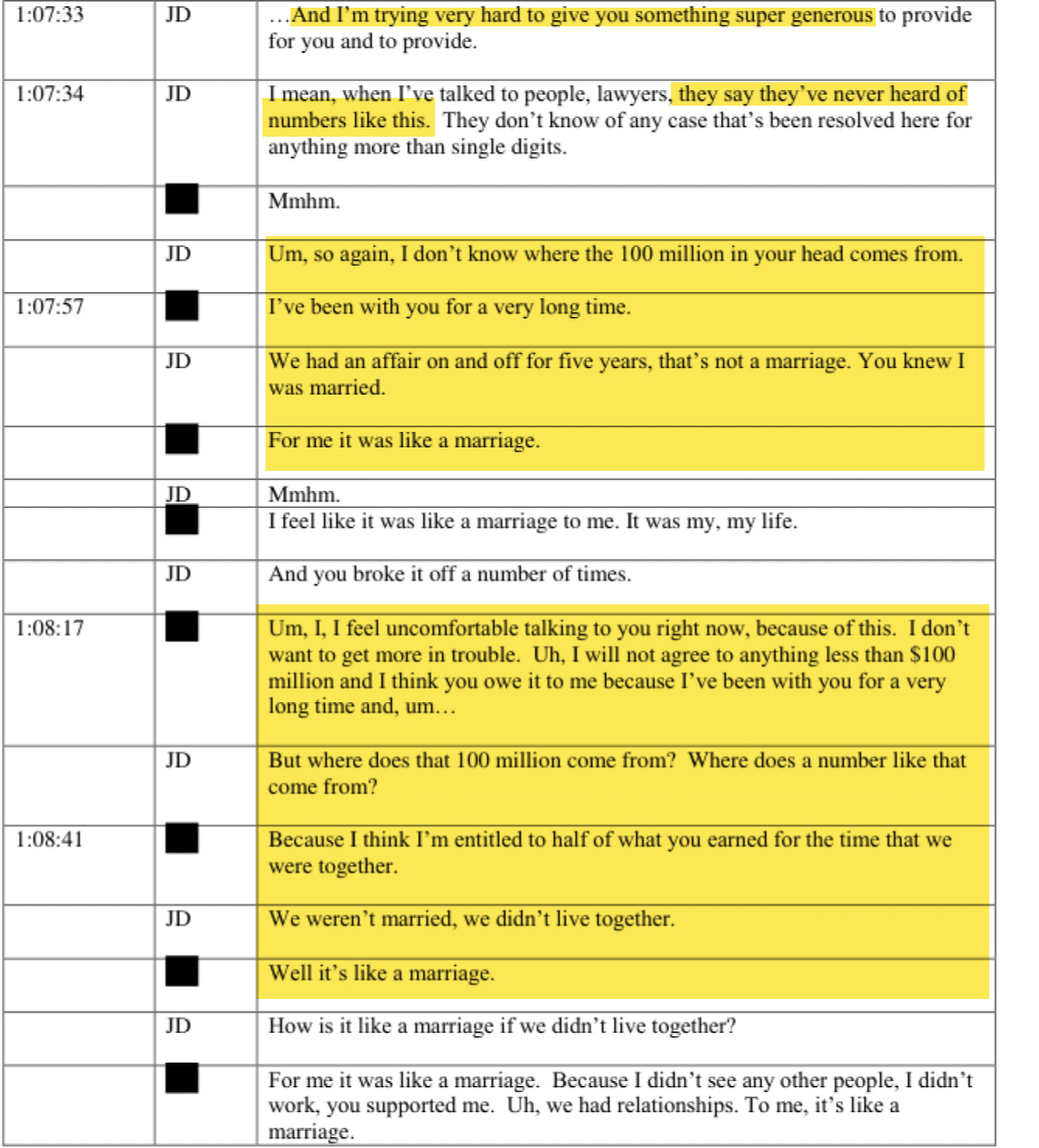
When pressed to explain where she derived that number, Ganieva argued that she considered the two to be married (even though Black was long married to another woman), thereby entitling her to half of what he earned during those years. Whenever Black pointed out that they only had sex once a month or so for five or six years in an apartment he rented for her, and that they never even lived together, she became offended and enraged and repeatedly hardened her stance.


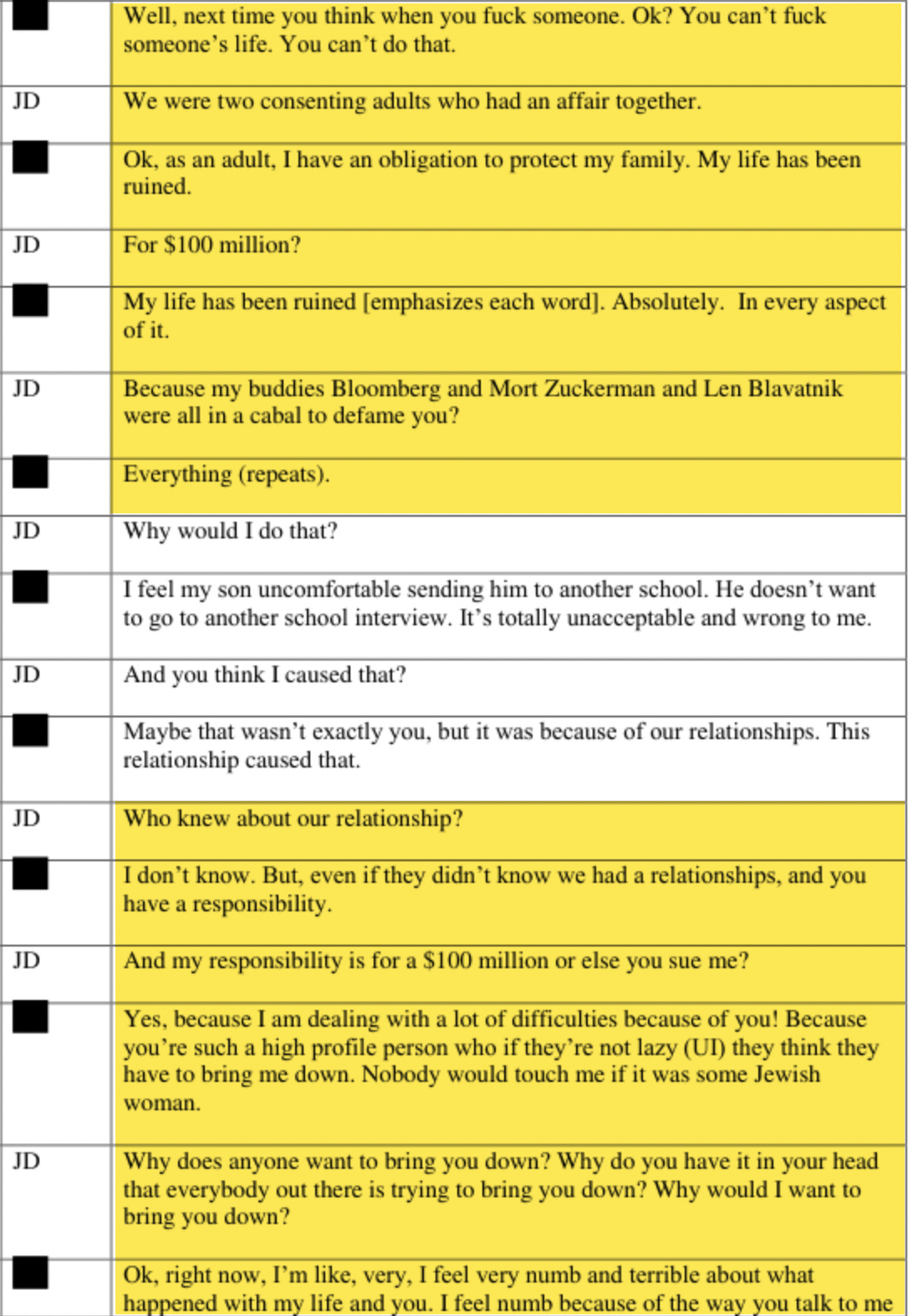
Over and over, they went in circles for hours across multiple meetings. Many times, Black tried flattery: telling her how much he cared for her and assuring her that he considered her brilliant and beautiful. Everything he tried seemed to backfire and to solidify her $100 million blackmail price tag. (In the transcripts, “JD” refers to “John Doe,” the name the law firm used for Black; the redacted initials are for Ganieva):


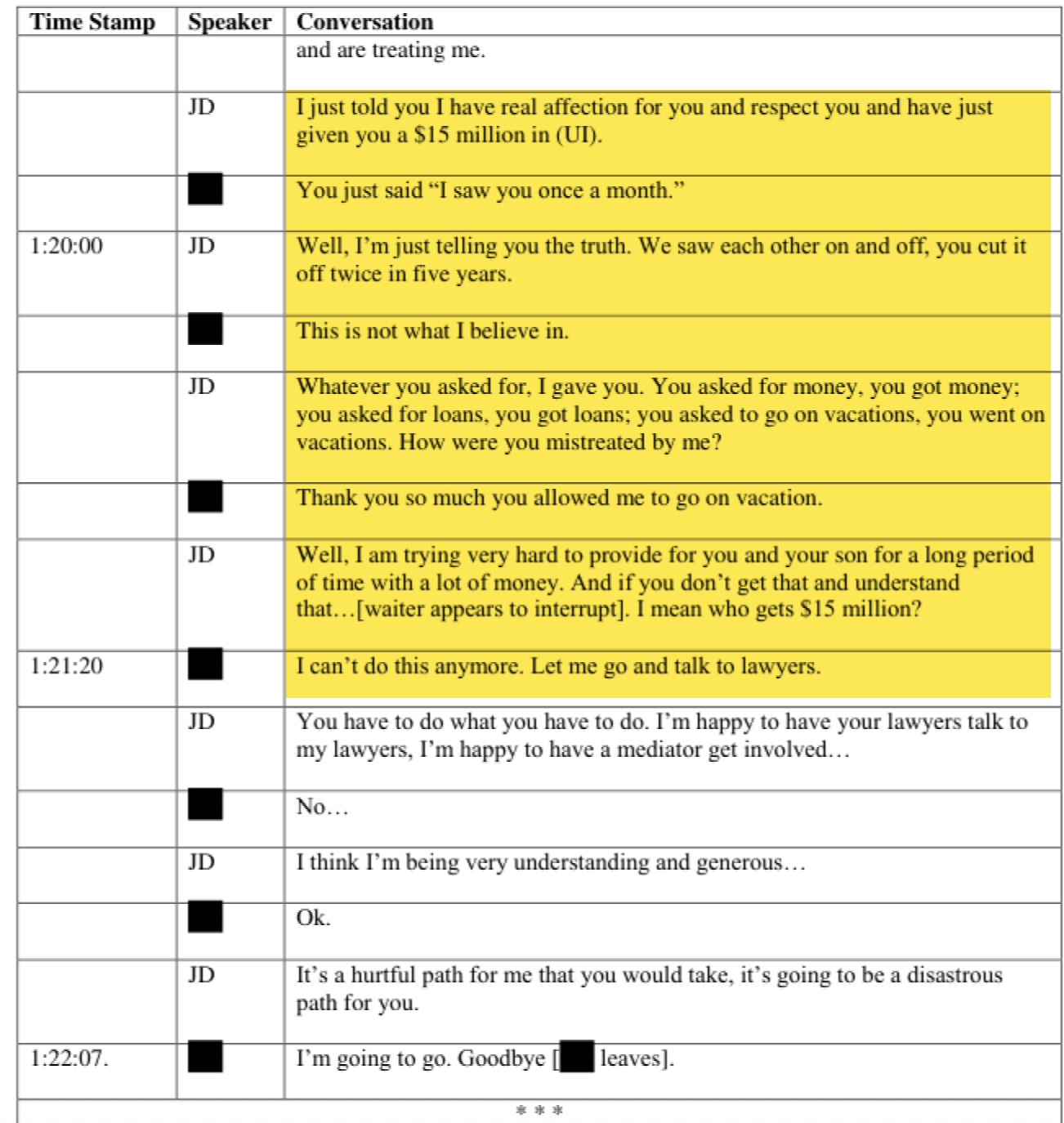
On other occasions during their meetings, Ganieva insisted that she was entitled to $100 million because Black had “ruined” her life. He invariably pointed out how much money he had given her over the years, to say nothing of the $15 million he was now offering her, and expressed bafflement at how she could see it that way.


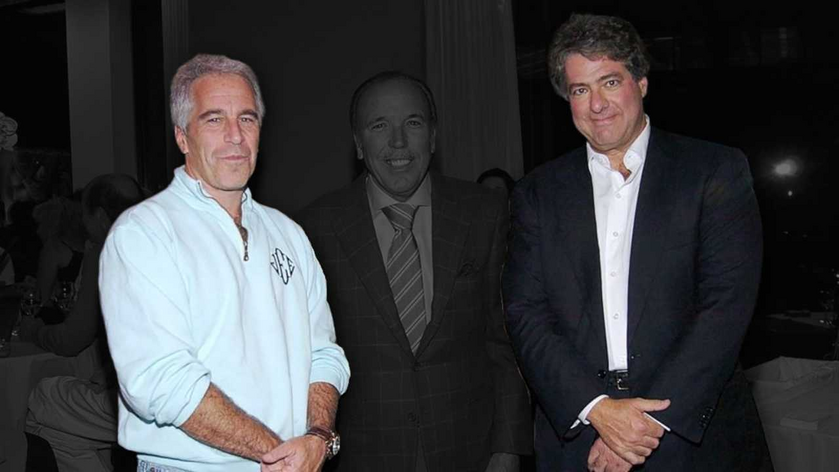
In response, Ganieva would insist that a “cabal” of Black’s billionaire friends — led by Michael Bloomberg, Mort Zuckerman, and Len Blavatnik — had conspired with Black to ruin her reputation. Other times, she blamed Black for speaking disparagingly of her to destroy her life. Other times, she claimed that people in multiple cities — New York, London, Moscow — were monitoring and following her and trying to kill her. This is but a fraction of the exchanges they had, as he alternated between threatening her with prison and flattering her with praise, while she kept saying she did not care about the consequences and would ruin his life unless she was paid the full amount:


By their last taped meeting in October, Ganieva appeared more willing to negotiate the amount of the payment. The duo agreed to a payment package in return for her silence; it included Black’s payments to her of $100,000 per month for the next 12 years (or $1.2 million per year for 12 years), as well as other benefits that exceeded a value of $5 million. They signed a contract formalizing what they called a “non-disclosure agreement,” and he made the payments to her for several years on time. The ultimate total value to be paid was $21 million.


Unfortunately for Black, these hours of misery, and the many millions paid to her, were all for naught. In March, 2021, Ganieva — despite Black’s paying the required amounts — took to Twitter to publicly accuse Black of “raping and assaulting” her, and further claimed that he “trafficked” her to Epstein in Miami without her consent, to force her to have sex with Epstein.


As part of these public accusations, Ganieva spilled all the beans on the years-long affair the two had: exactly what Black had paid her millions of dollars to keep quiet. When Black denied her accusations, she sued him for both defamation and assault. Her case was ultimately dismissed, and she sacrificed all the remaining millions she was to receive in an attempt to destroy his life.


Meanwhile, in 2021, Black was forced out of the hedge fund that made him a billionaire and which he had co-founded, Apollo Global Management, as a result of extensive public disclosures about his close ties to Epstein, who, two years earlier, had been arrested, became a notorious household name, and then died in prison. As a result of all that, and the disclosures from his mistress, Black — just like his ex-mistress — came to believe he was the victim of a “cabal.” He sued his co-founder at Apollo, the billionaire Josh Harris, as well as Ganieva and a leading P.R. firm on RICO charges, alleging that they all conspired to destroy his reputation and drive him out of Apollo. Black’s RICO case was dismissed.


Black’s fear that these disclosures would permanently destroy his reputation and standing in society proved to be prescient. An independent law firm was retained by Apollo to investigate his relationship with Epstein. Despite the report’s conclusion that Black had done nothing illegal, he has been forced off multiple boards that he spent tens of millions of dollars to obtain, including the highly prestigious post of Chair of the Museum of Modern Art, which he received after compiling one of the world’s largest and most expensive collections, only to lose that position due to Epstein associations.


So destroyed is Leon Black’s reputation from these disclosures that a business relationship between Apollo and the company Lifetouch — an 80-year-old company that captures photos of young school children — resulted in many school districts this week cancelling photo shoots involving this company, even though the company never appeared once in the Epstein files. But any remote association with Black — once a pillar of global high society — is now deemed so toxic that it can contaminate anything, no matter how removed from Epstein.


None of this definitively proves anything like a global blackmail ring overseen by Epstein and/or intelligence agencies. But it does leave little doubt that Epstein was not only very aware of the valuable leverage such sexual secrets gave him, but also that he used it when he needed to, including with Leon Black. Epstein witnessed up close how many millions Black was willing to pay to prevent public disclosure in a desperate attempt to preserve his reputation and marriage.


In October, The New York Times published a long examination of what was known at the time about the years-long relationship between Black and Epstein. In 2016, Black seemingly wanted to stop paying Epstein the tens of millions each year he had been paying him. But Epstein was having none of it.


Far from speaking to Black as if Epstein were an employee or paid advisor, he spoke to the billionaire in threatening, menacing, highly demanding, and insulting terms:


Jeffrey Epstein was furious. For years, he had relied on the billionaire Leon Black as his primary source of income, advising him on everything from taxes to his world-class art collection. But by 2016, Mr. Black seemed to be reluctant to keep paying him tens of millions of dollars a year.

So Mr. Epstein threw a tantrum.

One of Mr. Black’s other financial advisers had created “a really dangerous mess,” Mr. Epstein wrote in an email to Mr. Black. Another was “a waste of money and space.” He even attacked Mr. Black’s children as “retarded” for supposedly making a mess of his estate.

The typo-strewn tirade was one of dozens of previously unreported emails reviewed by The New York Times in which Mr. Epstein hectored Mr. Black, at times demanding tens of millions of dollars beyond the $150 million he had already been paid.

The pressure campaign appeared to work. Mr. Black, who for decades was one of the richest and highest-profile figures on Wall Street, continued to fork over tens of millions of dollars in fees and loans, albeit less than Mr. Epstein had been seeking.


The mind-bogglingly massive size of Black’s payments to Epstein over the years for “tax advice” made no rational sense. Billionaires like Black are not exactly known for easily or willingly parting with money that they do not have to pay. They cling to money, which is how many become billionaires in the first place.


As the Times article put it, Black’s explanation for these payments to Epstein “puzzled many on Wall Street, who have asked why one of the country’s richest men would pay Mr. Epstein, a college dropout, so much more than what prestigious law firms would charge for similar services.”


Beyond Black’s payments to Epstein himself, he also “wired hundreds of thousands of dollars to at least three women who were associated with Mr. Epstein.” And all of this led to Epstein speaking to Black not the way one would speak to one’s most valuable client or to one’s boss, but rather spoke to him in terms of non-negotiable ultimatums, notably similar to the tone used by Black’s mistress-turned-blackmailer:


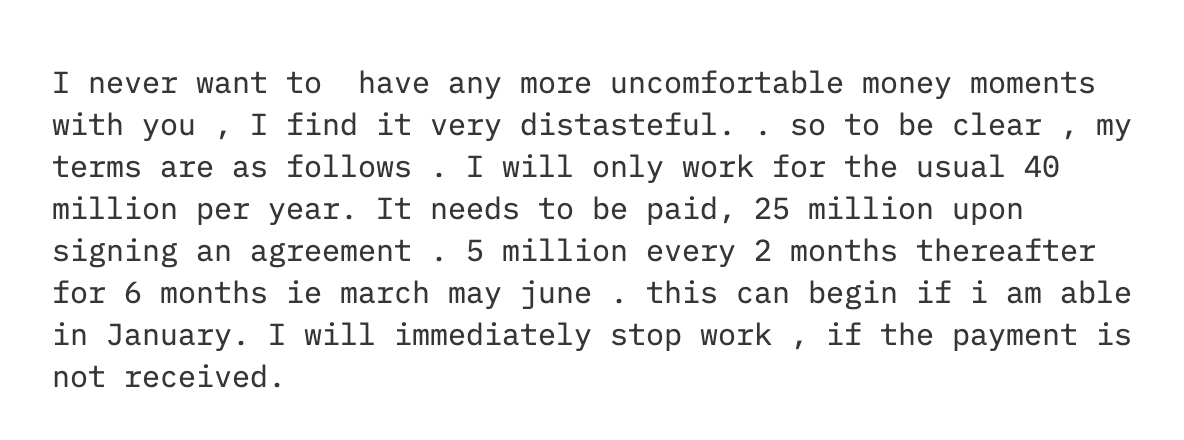
Email from Jeffrey Epstein to Leon Black, dated November 2, 2015.


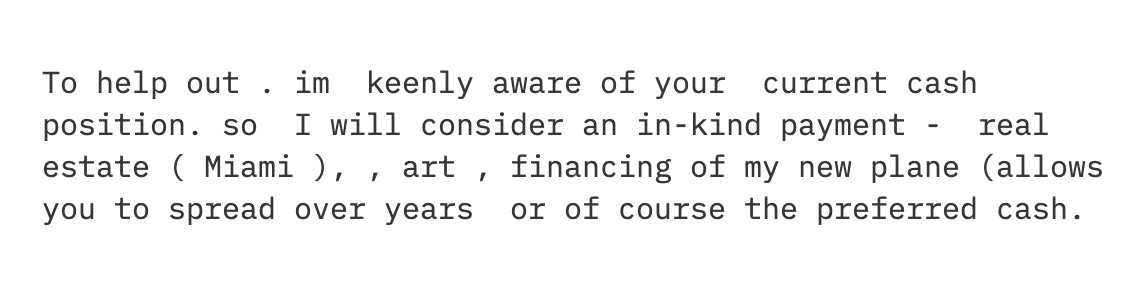
When Black did not relent, Epstein’s demands only grew more aggressive. In one email, he told Black: “I think you should pay the 25 [million] that you did not for this year. For next year it's the same 40 [million] as always, paid 20 [million] in jan and 20 [million] in july, and then we are done.” At one point, Epstein responded to Black’s complaints about a cash crunch (a grievance Black also tried using with his mistress) with offers to take payment from Black in the form of real estate, art, or financing for Epstein’s plane:


Email from Jeffrey Epstein to Leon Black, dated March 16, 2016.


With whatever motives, Black succumbed to Epstein’s pressure and kept paying him massive sums, including $20 million at the start of 2017, and then another $8 million just a few months later, in April.


Epstein had access to virtually every part of Black’s life, as he had with Wexner before that. He was in possession of all sorts of private information about their intimate lives, which would and could have destroyed them if he disclosed it, as evidenced by the reputational destruction each has suffered just from the limited disclosures about their relationship with Epstein, to say nothing of whatever else Epstein knew.


Leon Black was most definitely the target of extreme and aggressive blackmail and extortion over his sex life in at least one instance we know of, and Epstein was at the center of that, directing him. While Wall Street may have been baffled that Wexner and Black paid such sums to Epstein over the years, including after Black wanted to cut him off, it is quite easy to understand why they did so. That is particularly so as Epstein became angrier and more threatening, and as he began reminding Black of all the threats from which Epstein had long protected him. Epstein watched those exact tactics work for Black’s mistress.


The DOJ continues to insist it has no evidence of Epstein using his access to the most embarrassing parts of the private and sexual lives of the world’s richest and most powerful people for blackmail purposes. But we know for certain that blackmail was used in this world, and that Epstein was not only well aware of highly valuable secrets but was also paid enormous, seemingly irrational sums by billionaires whose lives he knew intimately.

Read full Article
post photo preview
Amazon's Ring and Google's Nest Unwittingly Reveal the Severity of the U.S. Surveillance State
Just a decade after a global backlash was triggered by Snowden reporting on mass domestic surveillance, the state-corporate dragnet is stronger and more invasive than ever.

That the U.S. Surveillance State is rapidly growing to the point of ubiquity has been demonstrated over the past week by seemingly benign events. While the picture that emerges is grim, to put it mildly, at least Americans are again confronted with crystal clarity over how severe this has become.


The latest round of valid panic over privacy began during the Super Bowl held on Sunday. During the game, Amazon ran a commercial for its Ring camera security system. The ad manipulatively exploited people’s love of dogs to induce them to ignore the consequences of what Amazon was touting. It seems that trick did not work.


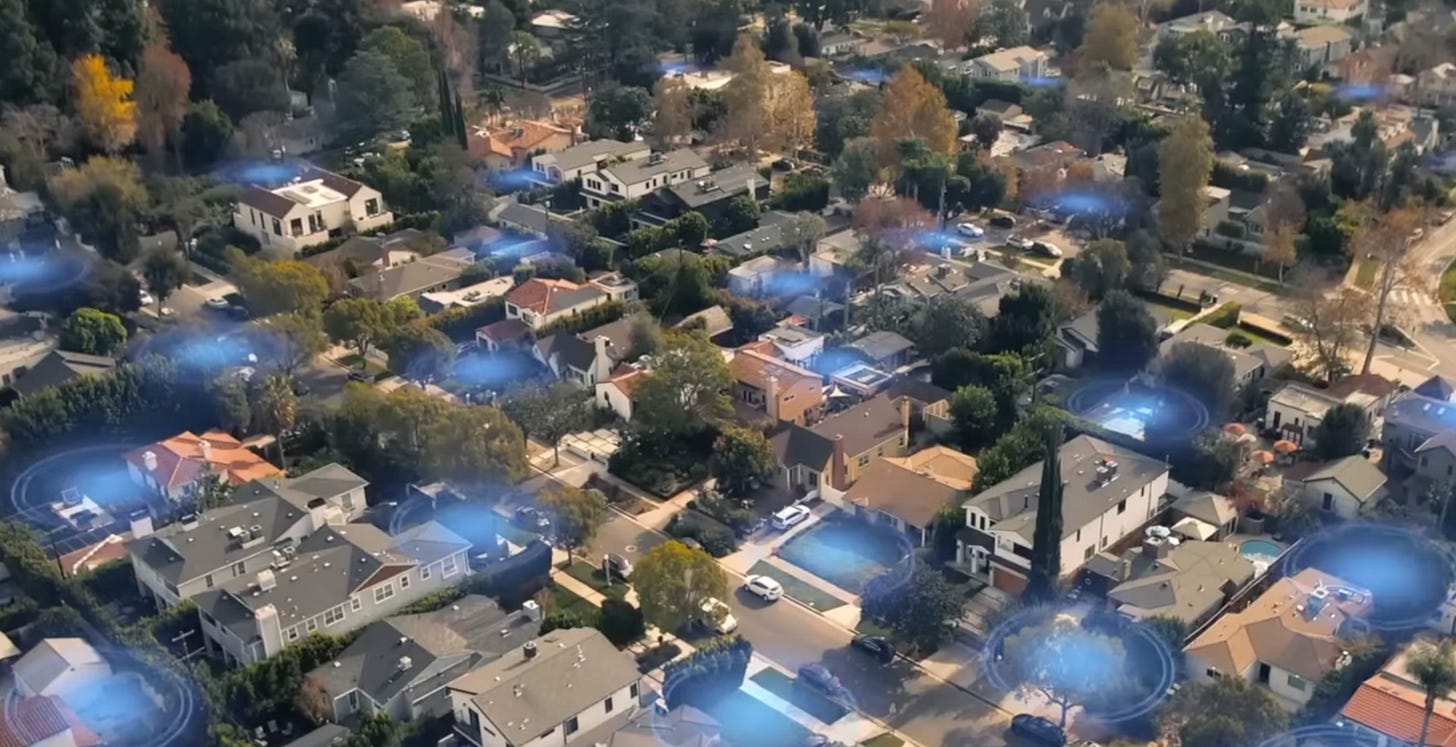
The ad highlighted what the company calls its “Search Party” feature, whereby one can upload a picture, for example, of a lost dog. Doing so will activate multiple other Amazon Ring cameras in the neighborhood, which will, in turn, use AI programs to scan all dogs, it seems, and identify the one that is lost. The 30-second commercial was full of heart-tugging scenes of young children and elderly people being reunited with their lost dogs.


But the graphic Amazon used seems to have unwittingly depicted how invasive this technology can be. That this capability now exists in a product that has long been pitched as nothing more than a simple tool for homeowners to monitor their own homes created, it seems, an unavoidable contract between public understanding of Ring and what Amazon was now boasting it could do.


Amazon’s Super Bowl ad for Ring and its “Search Party” feature.


Many people were not just surprised but quite shocked and alarmed to learn that what they thought was merely their own personal security system now has the ability to link with countless other Ring cameras to form a neighborhood-wide (or city-wide, or state-wide) surveillance dragnet. That Amazon emphasized that this feature is available (for now) only to those who “opt-in” did not assuage concerns.


Numerous media outlets sounded the alarm. The online privacy group Electronic Frontier Foundation (EFF) condemned Ring’s program as previewing “a world where biometric identification could be unleashed from consumer devices to identify, track, and locate anything — human, pet, and otherwise.”


Many private citizens who previously used Ring also reacted negatively. “Viral videos online show people removing or destroying their cameras over privacy concerns,” reported USA Today. The backlash became so severe that, just days later, Amazon — seeking to assuage public anger — announced the termination of a partnership between Ring and Flock Safety, a police surveillance tech company (while Flock is unrelated to Search Party, public backlash made it impossible, at least for now, for Amazon to send Ring’s user data to a police surveillance firm).


The Amazon ad seems to have triggered a long-overdue spotlight on how the combination of ubiquitous cameras, AI, and rapidly advancing facial recognition software will render the term “privacy” little more than a quaint concept from the past. As EFF put it, Ring’s program “could already run afoul of biometric privacy laws in some states, which require explicit, informed consent from individuals before a company can just run face recognition on someone.”


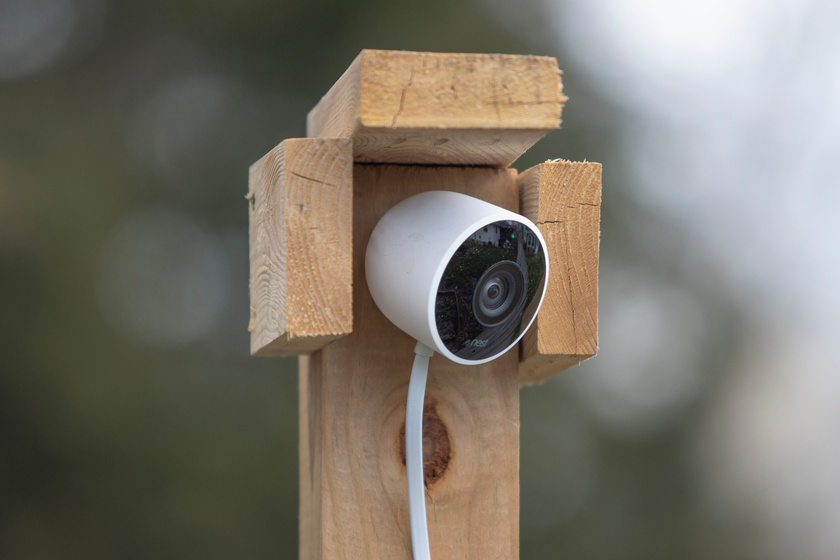
Those concerns escalated just a few days later in the context of the Tucson disappearance of Nancy Guthrie, mother of long-time TODAY Show host Savannah Guthrie. At the home where she lives, Nancy Guthrie used Google’s Nest camera for security, a product similar to Amazon’s Ring.


Guthrie, however, did not pay Google for a subscription for those cameras, instead solely using the cameras for real-time monitoring. As CBS News explained, “with a free Google Nest plan, the video should have been deleted within 3 to 6 hours — long after Guthrie was reported missing.” Even professional privacy advocates have understood that customers who use Nest without a subscription will not have their cameras connected to Google’s data servers, meaning that no recordings will be stored or available for any period beyond a few hours.


For that reason, Pima County Sheriff Chris Nanos announced early on “that there was no video available in part because Guthrie didn’t have an active subscription to the company.” Many people, for obvious reasons, prefer to avoid permanently storing comprehensive daily video reports with Google of when they leave and return to their own home, or who visits them at their home, when, and for how long.


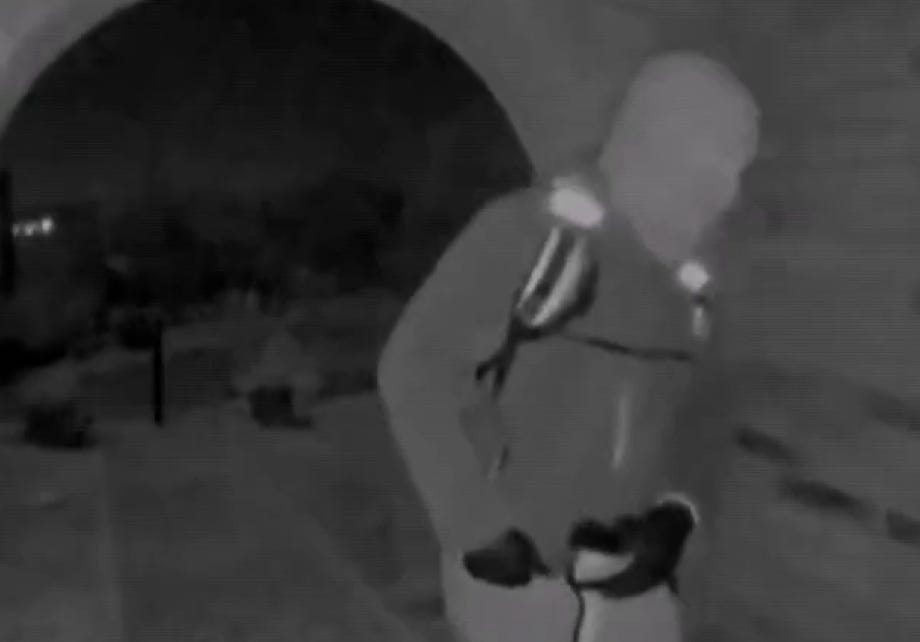
Despite all this, FBI investigators on the case were somehow magically able to “recover” this video from Guthrie’s camera many days later. FBI Director Kash Patel was essentially forced to admit this when he released still images of what appears to be the masked perpetrator who broke into Guthrie’s home. (The Google user agreement, which few users read, does protect the company by stating that images may be stored even in the absence of a subscription.)


While the “discovery” of footage from this home camera by Google engineers is obviously of great value to the Guthrie family and law enforcement agents searching for Guthrie, it raises obvious yet serious questions about why Google, contrary to common understanding, was storing the video footage of unsubscribed users. A former NSA data researcher and CEO of a cybersecurity firm, Patrick Johnson, told CBS: “There's kind of this old saying that data is never deleted, it's just renamed.” 


Image obtained through Nancy Guthrie’s unsubscribed Google Nest camera and released by the FBI.


It is rather remarkable that Americans are being led, more or less willingly, into a state-corporate, Panopticon-like domestic surveillance state with relatively little resistance, though the widespread reaction to Amazon’s Ring ad is encouraging. Much of that muted reaction may be due to a lack of realization about the severity of the evolving privacy threat. Beyond that, privacy and other core rights can seem abstract and less of a priority than more material concerns, at least until they are gone.


It is always the case that there are benefits available from relinquishing core civil liberties: allowing infringements on free speech may reduce false claims and hateful ideas; allowing searches and seizures without warrants will likely help the police catch more criminals, and do so more quickly; giving up privacy may, in fact, enhance security.


But the core premise of the West generally, and the U.S. in particular, is that those trade-offs are never worthwhile. Americans still all learn and are taught to admire the iconic (if not apocryphal) 1775 words of Patrick Henry, which came to define the core ethos of the Revolutionary War and American Founding: “Give me liberty or give me death.” It is hard to express in more definitive terms on which side of that liberty-versus-security trade-off the U.S. was intended to fall.


These recent events emerge in a broader context of this new Silicon Valley-driven destruction of individual privacy. Palantir’s federal contracts for domestic surveillance and domestic data management continue to expand rapidly, with more and more intrusive data about Americans consolidated under the control of this one sinister corporation.


Facial recognition technology — now fully in use for an array of purposes from Customs and Border Protection at airports to ICE’s patrolling of American streets — means that fully tracking one’s movements in public spaces is easier than ever, and is becoming easier by the day. It was only three years ago that we interviewed New York Timesreporter Kashmir Hill about her new book, “Your Face Belongs to Us.” The warnings she issued about the dangers of this proliferating technology have not only come true with startling speed but also appear already beyond what even she envisioned.


On top of all this are advances in AI. Its effects on privacy cannot yet be quantified, but they will not be good. I have tried most AI programs simply to remain abreast of how they function.


After just a few weeks, I had to stop my use of Google’s Gemini because it was compiling not just segregated data about me, but also a wide array of information to form what could reasonably be described as a dossier on my life, including information I had not wittingly provided it. It would answer questions I asked it with creepy, unrelated references to the far-too-complete picture it had managed to create of many aspects of my life (at one point, it commented, somewhat judgmentally or out of feigned “concern,” about the late hours I was keeping while working, a topic I never raised).


Many of these unnerving developments have happened without much public notice because we are often distracted by what appear to be more immediate and proximate events in the news cycle. The lack of sufficient attention to these privacy dangers over the last couple of years, including at times from me, should not obscure how consequential they are.


All of this is particularly remarkable, and particularly disconcerting, since we are barely more than a decade removed from the disclosures about mass domestic surveillance enabled by the courageous whistleblower Edward Snowden. Although most of our reporting focused on state surveillance, one of the first stories featured the joint state-corporate spying framework built in conjunction with the U.S. security state and Silicon Valley giants.


The Snowden stories sparked years of anger, attempts at reform, changes in diplomatic relations, and even genuine (albeit forced) improvements in Big Tech’s user privacy. But the calculation of the U.S. security state and Big Tech was that at some point, attention to privacy concerns would disperse and then virtually evaporate, enabling the state-corporate surveillance state to march on without much notice or resistance. At least as of now, the calculation seems to have been vindicated.

Read full Article
See More
Available on mobile and TV devices
google store google store app store app store
google store google store app tv store app tv store amazon store amazon store roku store roku store
Powered by Locals