The following is an abridged transcript from System Update’s most recent episode. You can watch the full episode on Rumble or listen to it in podcast form on Apple, Spotify, or any other major podcast provider.
System Update is an independent show free to all viewers and listeners, but that wouldn’t be possible without our loyal supporters. To keep the show free for everyone, please consider joining our Locals, where we host our members-only aftershow, publish exclusive articles, release these transcripts, and so much more!

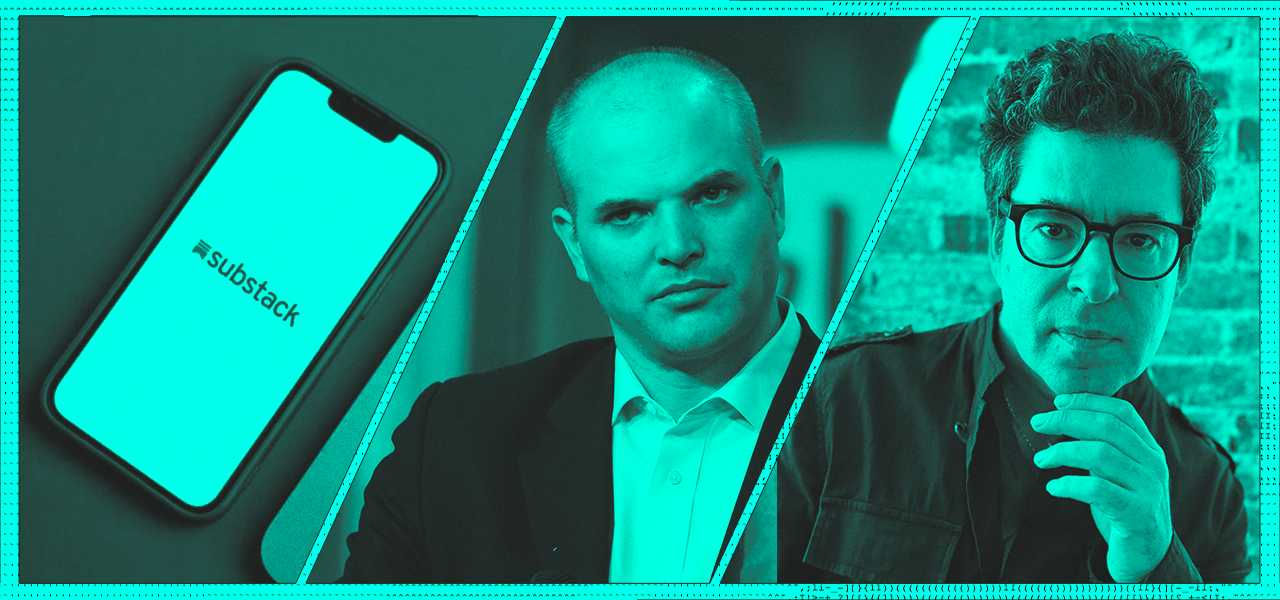
The CEO of Substack, Chris Best, will be here tonight to discuss what this free speech protection program is, what prompted it, and other developments at Substack as well, which formed to be a platform that preserves free speech on the internet, very similar to Rumble.
Then, we have a potpourri – a smorgasbord – of various events we want to cover quickly tonight: the behavior of the Democrats at the Congressional hearing held yesterday on the censorship regime featuring the testimony of Matt Taibbi, as well as the would-be Homeland Security disinformation Nina Yankovitch – remember her? We also want to talk about the behavior of both parties at yesterday's hearing on the newly released JFK files and the possible role of the CIA hearing that featured the Director of the film “JFK,” Oliver Stone, as well as the long-time JFK investigator Jefferson Morley, whom we interviewed on our show last night. We also want to cover the newly elected Israel-focused member of Congress, the Republican from Florida who is taking Mike Waltz's seat, Randy Fine, and, time permitting, several other issues.
The Interview: Chris Best
When I resigned from The Intercept, the media outlet that I co-founded, I immediately went to Substack, a platform I didn't know very much about and had an extremely positive experience there the entire time I was there in large part because they were very committed to giving their writers total freedom and protecting freedom of speech. You didn't have to worry about saying something that the platform would dislike or that would ban you. They were an NRA platform devoted to free speech.
Chris Best is a co-founder and CEO of Substack. He has fought, as has Substack, to defend free speech rights while connecting users with creators, ideas and communities they care about most. It was founded in 2017. Substack is building a new economic engine for culture by putting publishers in charge and enabling subscribers to support the work they deeply value.
Before Substack, Chris was the co-founder and CTO of the mobile messenger app Kit, from 2009 to 2017. He helped scale Kit and built a platform used by over 300 million users. It is always a pleasure to welcome him to our show.
G. Greenwald: Chris, good evening. Thanks so much for taking the time to join us.
Chris Best: Thank you for having me.
G. Greenwald: All right. So, let's get right into this because Substack has teamed up with FIRE.ORG, which I sort of consider to be the new ACLU, what the ACLU was before they kind of prioritized partisan agendas above their original values.
FIRE has been speaking out quite vocally, even though they had developed a mostly conservative audience because they had been defending conservative speech on campus about a lot of these new censorship attacks coming from the new administration.
You joined with FIRE and the idea was to protect writers in America, especially ones who are somehow being targeted or punished for their dissent on foreign policy, Israel, or any other topics.
It’s not all that usual for a company that is a for-profit company, which is true of Substack, to take such a vocal position on controversial issues. What is it that prompted you to do so?
Chris Best: Substack doesn't take positions broadly on political issues; we don't take a position, for example, on immigration policy or foreign policy. But we do see freedom of speech and freedom of the press as centrally important to our business and our mission. And so, this felt really important.
G. Greenwald: I get that, and free speech, in my view, has been kind of central to your identity and your mission from the beginning and I've never really seen it in conflict with your business model, although it certainly can be. If you take any kind of position, even one just vaguely in support of free speech that certainly can. But the statement refers to new sorts of attacks on the right of free thought, the right to free expression. I'm just kind of wondering, was there a tipping point or a triggering point for you over the last couple of months where you decided Substack needed to do something?
Chris Best: I think the event that put this in kind of like the Substack Bailiwick was the Öztürk editorial and deportation. The fact that somebody is being, as far as we know, targeted for the contents of an editorial that they have co-published, to us, that's a very clear free speech issue and so, even though it's not, that felt like a very clear line in the sand.
We've had this Substack Defender program for years that helps defend free speech from legal threats. It's helped dozens of cases. We wanted to make sure that we were stepping in and helping wherever we could on this issue and we're delighted to partner with FIRE, which is just a fantastic organization.
G. Greenwald: Yeah. For those who don't know – and viewers of the show know because we covered that story in depth, what you're referring to is a Turkish-born PhD student at Tufts, who was in the United States very legally working in her on her PhD program. She was recently snatched up by plainclothes officers on the street. She was obviously very frightened. She didn't even know these were agents of the state. They arrived in masks. They grabbed her phone that she was using so they could have access to her phone and then shipped her to a deportation facility in Louisiana. The only thing the government alleges, or the only things groups that monitor people like this allege is this op-ed. There's no claim that she even participated in the protest, let alone harassed anybody, blocked anyone's entrance, or vandalized a building. It's apparently solely about the op-ed.
Now, you just mentioned you were happy to join with FIRE. I'm just wondering how that came about and why FIRE?
Chris Best: There aren't that many consistent defenders of freedom of the press. Freedom of speech is something that I think has a lot of fair-weather friends. It's something that we've tried to be consistent about over the years and I've been very impressed by FIRE as well. You mentioned in the intro that they were sort of known for defending right-wing people against threats of censorship, but they also do that across the political spectrum. I think they're just very value-aligned on this issue. And I know Greg Lukianoff. I think they're fantastic and we're just happy to partner with them.
G. Greenwald: Yeah, just to underscore that, I mean, I know some of the people who founded and run FIRE, including Greg, who you just mentioned, who actually are quite vocal supporters of Israel, very vocal support of Israel just in their personal views and yet they've spent a lot of time defending pro-Palestinian speech on campus because their mission is to defend free speech, regardless of what they think.
Chris, I was thinking about this earlier today and kind of is very ironic because when I first came to Substack, it was late 2020, so it was a little bit more than four years now, it wasn't very well known, but it was starting to be better known before I got there, and certainly over the next year. But the criticism of it at the time was that because it allowed free speech, it was basically some sort of right-wing or even hospitable to fascism kind of outlet when in reality you weren't promoting right-wing speech, you were just offering a platform for people who had been censored, and you had a ton of writers who weren't even remotely on the right.
Now here we are, four years later, and what you're essentially saying is you want to make sure that people who are writing at Substack have the right to criticize foreign policy, including U.S. foreign policy toward Israel or to the Middle East or anything else and kind of protect them from some of these programs we've seen from the Trump administration.
My guess is, or there's certainly a possibility, that if you start protecting people who have that perspective, you kind of now get the opposing accusation, “Oh, you're protecting left-wing radicals” or even that you're “antisemitic” which, if you haven't gotten yet, I'm sure you're likely to, given this program. What is the mission of Substack in terms of dealing with any type of those accusations?
Chris Best: I think the biggest thing is to have principles, know what you stand for and why, stay calm and make sure that you're sort of consistently trying to live up to the principle. And you're absolutely right that I think free speech is a mechanism that protects writers and thinkers from power. And so, at any given time, people will look at freedom of speech as a partisan issue or as a one-sided issue, but over a long enough time horizon, we've just seen this. We've had people come to Substack in recent years who had been former critics of us, who used to say, “Substack is this evil right or left-wing place because it platforms this thing.” They wind up finding themselves censored when the worm turns, and they come to appreciate the wisdom of a consistent stance in favor of freedom of thought, freedom of speech and freedom of the press. I think that we've been doing that for long enough, that the evidence says we're not doing it for one side. It's a consistent policy and I really believe in it. I think it's the best thing for the platform; I think it's the best thing for the country.
G. Greenwald: One of the things that has impressed me being here at Rumble is that they have a very kind of vigorous commitment to this same principle. It's a place for anyone to come, anyone to be heard, it's not their place to sit in judgment of which opinions are sufficiently right or wrong to be allowed to be hurt. At times this has in fact jeopardized their commercial benefits. They're as a result of that position, their refusal to censor, they're not allowed in certain countries including Brazil. I was just in France about a month ago, tried to access my own show and got that message that says “Rumble's not available in France” because they wouldn't remove RT and other Russian outlets that the French government demanded they remove. And I guess their position is sort of twofold. One is that in the long term we think free speech will help our commercial interests, but number two, even if they don't, even if they do undermine them somewhat, we're not willing to profit by violating our own beliefs in free speech and censoring on behalf of power centers. Which of those two, or if it's any of those, do you see Substack's position as being?
Chris Best: I do think it's both. We've designed the company to be aligned with this mission. Writers on Substack, creators on Substack, are independent. They own their work, they own connection to their audience, so they can leave at any time. If we turned around one day and said, “Ha ha ha, we've sold out for some short-term profit, we're going to start censoring,” we would lose all of our business.
I think that I’ve tried, we've tried, to build a company that puts us on the side of writers and thinkers who have the right to say what they think and readers and viewers who have a right to choose what to subscribe to and what to hear. I don't think that there is a conflict, but it is both a commercial and a moral proposition for us.
G. Greenwald: And do you get pressure from investors or from people interested in the more financial side of Substack that if push comes to shove, they don't want you to choose this kind of mission of free speech if it is going to undermine the financial profitability of the company?
Chris Best: If anything, the opposite. We have wonderful investors. We have wonderful employees, too. I think we've been at this long enough that people know what we're about. They understand the theory of what we are doing. People would not sign up to work at or invest in Substack if they didn't see these things as valuable. And so, we're quite fortunate that we're pretty aligned.
G. Greenwald: So, let's talk about the program itself. When I was there, you started introducing programs that would kind of support the writers, including some really important support mechanisms, such as if a writer gets sued by some subject that they're writing about, to help them be able to have legal counsel that defends them, which is incredibly important, especially if you're an independent journalist. If you don't have that, you could be deterred from writing about wealthy people or powerful people because of the threat that you could be sued, you begin offering another kind of support services for research and the like, and it's become not just this neutral platform, but a place that is designed to support the writers that you attract, which is one of the reasons I think you're attracting so many. So, what is this new program that you just unveiled specifically intended to do?
Chris Best: It is spiritually similar to the Defender Program that you're talking about, the genesis of that was we noticed that if you're an independent journalist, you're writing something about a local businessman or politician that is true or is like valid journalism and they send you this legal threat to shut you down. It's basically like censorship by lawfare. And so, we just felt like the platform had an interest in helping defend against those kinds of activities. If it was costless to do that, if people could just be rolled over at no cost, it was going to have this massive chilling effect on everybody on Substack, on the internet as a whole. And we feel the same about these actions. It cannot be the case that people can be snatched up in America for writing an op-ed. We have to help with that where we can, we have to provide what resources we can to support, we're partnering with FIRE, and we're providing money in legal defense. Whatever we can do to help push back against specifically the threats to free speech, we want to do.
G. Greenwald: question, because I found this funny too. When I was at Substack, and the kind of awareness of Substack was growing pretty significantly, it was attracting a much larger audience, many writers who had a big platform previously, it wasn't just the accusation wasn't, just, “Oh, there's some sort of proto-fascist site, because they're allowing a bunch of right-wing people who should be banned or whatever.” That was at the height of the kind of left-liberal censorship regime as opposed to the one we're getting now. But the other attack on it that I remember quite well came from corporate journalists because they're afraid of anything that might be a competitor to the hegemony or monopoly on a discourse that corporate journalism has and certainly, Substack, attracting so many readers, became a threat.
I remember very well that the consensus was that Substack could ruin journalism. It was allowing all these people to write and to do journalism “without any kind of editorial fact-checking structure” and it was just for people to kind of sound off and it was something that would erode journalism.
Now, just yesterday, I think, The New York Times had an article on Substack, about how many refugees from corporate media, who four years ago would never have been caught dead associating with Substack are now not just going to Substack but finding success on Substack after they were basically expelled from their company for one reason or another.

It kind of details not just that they're there, but that they are finding a lot of success. What do you think changed in kind of the ecosystem over the last few years that had corporate media personalities, contemptuous of Substack, kind of scorning it to now kind of “if you can't beat them, you join them” mentality, going to Substack?
Chris Best: I do think part of it is just that there is a lot of pressure on those business models. That's been a tough business for a bunch of reasons. But I think the big thing is, I think a lot of people, you said before, people were worried that if you give people freedom, it's going to make the thing bad. It's going to turn into something that you don't want, something that can't make a good product. And I think the reverse is true. When you set the incentives up correctly, when you give people editorial freedom, when you give them the right to their own platform, the right to set their own standards in their community, when you get them a viable business model for doing the work they believe in, ultimately it works, ultimately you can make good things, and that is attracting more and more people, and I guess more sides of the political spectrum are seeing the value of freedom of speech owning your audience.
G. Greenwald: Yeah. As you said, people kind of like the idea of a control discourse until it kind of starts coming for them …
Chris Best: Until they’re the ones being controlled.
G. Greenwald: Exactly, then they find the virtues of free speed.
I know some of them are doing quite well. Are you pleased with the growth of Substack? Has it been kind of a continual growing as a result of these new issues in the media?
Chris Best: We're thrilled: more than five-million-page descriptions. The Substack app is growing very quickly. You should get the app, get the Rumble app too. Get the Substack App as well. It's going great and it's been a steady growth over the years at this point and we think it's working. People are hungry to take back their minds, to have something different and we're delighted that more and more people are choosing Substack.
G. Greenwald: All right, Chris, it was great to see you. Congratulations on this initiative, which I obviously do not just support, but think is incredibly important. Keep up the great work.
Chris Best: Thank you. Thanks for everything.

There's a lot of different things going on, and we wanted to try to just sort of, instead of delving in very, very deeply into each of them, kind of just give you a sense of some of them because the news cycle has been extremely filled. It's been a very fast news cycle, I don't think there's been a slow news day since Trump's inauguration.
We tend to do stories more in-depth here. Maybe two, a maximum of three a night, our challenge is which ones we're going to leave out because there are always so many things to cover.
Obviously, the big news of today is this new scheme of tariffs that Trump introduced that has become quite controversial. I'm not an expert at all on tariffs. If we're going to talk about it, we would have someone on to talk about it. But I wanted to show you just a few quick things that we would mean to talk about that I think are interesting kind of in a faster pace order.
Yesterday, there was a hearing on the JFK documents and we covered that by having Jefferson Morley, who was a witness at that hearing, on our show. He talked about the hearing itself and the discovery of CIA-related documents in the JFK files. But there was also, in a different committee, a hearing to investigate the censorship industrial complex, the program by the Biden administration to censor dissent by coercing Big Tech companies, by threatening Big Tech companies, in terms of what they can allow and what they cannot allow, controlling them to remove dissent on COVID, Ukraine, a whole variety of other issues.
One of the witnesses who was testifying was our friend, the journalist Matt Taibbi, and he did that, of course, because of his work on the Twitter Files, which was one of the main sources of information to show how the government was pressuring social media companies and Big Tech, so that's why he was there.
The Democrats invited to sit next to him that utterly crazy woman who they wanted to put in charge of the ‘disinformation’, as part of Homeland Security, Nina Yankovitch. And even in our society that loves censorship and that is in love with this idea of experts identifying disinformation for you – because they know more than you do about what is true and what is false and they're going to protect you from false things – she was such a caricature of kind of a liberal censor that she was just a bridge too far even for our political culture when Biden was president. So, they had to kind of scrap that, and she's been very angry about that ever since.
I just want to show you how scummy people in Congress can be. So, Matt Taibbi was there as a journalist, and if you know Matt, he has a very mild-mannered demeanor. He's very polite, very soft-spoken. If you engage him in debate, he's not really a combative personality. Sometimes when I watch Matt in these circumstances, my aggression kicks in. I just say, Matt, say this, push him, but that's not how Matt is. I've never seen him be disrespectful to anybody.
So, of course, if you're going to denounce the censorship regime of Joe Biden, you're going to have Democrats who are going to be angry at you, even though it's, again, something that had been so fundamental to left-liberal politics for decades, the idea of free speech, and now it's not at all.
So Matt Taibbi was there. He got invited. He went to testify in Washington, left his family, left his kids to go do it and here's the ranking member of that committee, her name is Sydney Kamlager-Dove – she's a member of Congress, a Democratic member of Congress – and here is what she did in response to Matt's testimony.
Video. Sydney Kamlager-Dove, C-SPAN. April 1, 2025.
Do you see how scummy that is? Almost 30 years ago, in Moscow according to newspapers – and these were old newspaper articles – Matt Taibbi terrorized women.
This all came from a work of fiction that Matt Taibbi's partner, Mark Ames, wrote. In exile, they had an extremely satirical newspaper. They were quite young; Matt, kind of in particular, got known for a sort of raucous style of writing. I remember reading him when I was in law school or even as a lawyer in the New York server, the New Press. He had a column there. It was very satiric, it was very ironic, but this book, in particular, was fiction. It was a work of fiction. And a lot of articles that came out right when Matt Taibbi had a new book out were designed to depict him as some sort of misogynist, like a victim of the Me Too movement, or a predator of the Me Yoo movement.
And then once these newspaper articles ran, several of them ended up retracting the article, because the thing that was missing from Matt Taibbi's reign of terror against women in Moscow was a single woman who identified herself as his victim. No one ever complained about Matt Taibbi in any way. No woman to this day has ever said, “Oh, Matt Taibbi harassed me, he treated me inappropriately.” Yet, this scumbag of a congresswoman is exploiting the Me Too movement.
Let me just say too, that right now, in New York City, the leading candidate to become mayor of New York is the Democrat Andrew Cuomo who had to resign from his gubernatorial position several years ago because he was engulfed in a multiple-woman scandal and alleging sexual harassment or inappropriate sexual behavior. He was forced out of office and the entire Democratic establishment is now going to align behind Andrew Cuomo because they don't actually care at all. Those were actually victims, alleged victims there, rising and saying, “Yes, he treated me improperly.”
They don't care about that at all! Every four years, the Democratic convention hosts Bill Clinton, who's been not just credibly accused of sexual assault, but even of rape and feminist groups throughout the '90s, defended Bill Clinton, defended Bill Clinton, against all of these women accusers. Hillary Clinton demeaned their character and attacked the victims. James Carville said, “Oh yeah if you drag a dollar through a trailer park, you never know what kind of trash you're going to find.” Joe Biden himself had all kinds of accusations about inappropriate behavior with women. Do you think these people care in the slightest?
They so cynically and cheaply exploit this issue, the Me Too issue, sexual harassment, womanizing, feminism. They don't believe in it at all. What relevance did it even have? Matt's there to talk as a journalist about an investigation that he did and she's like, “Hey, by the way, 30 years ago, some newspaper said that he was harassing women.” He never got sued, he was never charged and there's no victim, newspapers retracted it when they understood that it was actually based on a work of fiction, primarily written by his partner Mark Ames, who also has never been accused of any of that, by any woman. But they'll just whip it out because they just want to demean and malign anybody who criticized Biden's censorship regime.
It is the left-liberal establishment in the West that has largely imposed a censorship regime. It came from 2016 with the dual traumas for Western liberalism of the British people voting to leave the EU in contempt of the Brussels bureaucrats that rule their lives followed three or four months later by the shock of Trump's victory over the ultimate establishment maven, Hillary Clinton. After that, they decided, all of them, that they could not afford free speech. They could not permit free speech anymore on the internet because when you do so, you can't control how people vote.
And they concocted a whole new industry called the disinformation industry, a whole expertise they fabricated out of whole cloth, disinformation experts, that really does not exist. None of these people pretended to believe in free speech, none of the people had any concern about it. She began by saying, “Why are we even talking about these things? The only things that we should be talking about are the economic suffering of ordinary Americans,” which is so ironic because the reason people hate the Democratic Party is that they've never been interested in that, not in the last decade.
They've been talking about Russiagate and Putin and Trump loving Hitler, just anything that they could fabricate and concoct that had nothing to do with the lives of ordinary Americans. Who are they going to fool now by pretending, “Oh, we shouldn't be even talking about an attack on people's fundamental free speech rights because it's just really irrelevant?” But that is the Democratic Party, just pure and simple.
Even when they try to change their brand and feign concern with the working class or whatever, it's just so unconvincing. Everybody knows that's not at all what their interests are. Consultants have told them they need to start making people believe that's what they care about, but that's what they care about in the slightest. And so, to distract attention from Taibbi's reporting and from the other reporting about the censorship regime that they presided over for so long, first, you're going to say, “Hey, 30 years ago, he harassed women, even though it's a lie.” And then say, by the way, who cares? We should only focus on Signal Gate – or whatever.
Here is part of the hearing as former New Jersey Governor Thomas Kean is questioning Matt Taibbi as well as another witness about the censorship industrial complex.
Video. Matt Taibbi, Thomas Kean, C-SPAN. April 1, 2025.
All that is absolutely true. Now, there is some hypocrisy, obviously, on the Republican side as well, because there is, as we've been covering, a systematic assault on the rights of people in the United States, citizens, green card holders, people who are here legally on student visas for criticizing Israel. We've covered that at length. That's a whole different type of censorship regime that is at least as menacing as the one they're talking about here. But just for reporting on this, Matt Taibbi is so hated by the Democratic Party, which used to pretend to have free speech as one of its core values, that they're willing to try to demean his character even with no foundation.

All right. At the other hearing, the JFK hearing, we showed a little bit of this clip last night while we were interviewing Jefferson Morley. Jeff Morley identifies himself as a liberal Democrat, someone sort of on the progressive side of the Democratic Party. And he always has been. He's not a conservative anyway. And yet it's very notable that the people who have the most interest in his reporting, especially when it comes to the role that the CIA played in that assassination and covering it up, tend to be right-wing media.
A lot of right-wing media wants to understand whether the CIA had a role to play in the Kennedy assassination, and by and large, Democrats could not be more uninterested, even though the target of that assassination was a Democratic president, from the most elevated Democratic royal family, which is the Kennedys.
You would think they would have the biggest interest, especially because back then, they were the ones who regarded the CIA as sinister, but no more. There's no iota of concern about the CIA barely in left-liberal politics and Democratic Party politics. And that's why Jasmine Crockett had this to say when she attended the hearing where Oliver Stone and Jeff Morley, people have spent decades in-depth studying this issue, investigating this issue. An issue that Jasmine Crockett knows almost nothing about. And here's what she had to say.
Video. Jasmine Crockett, C-SPAN3. April 1, 2025.
Can you believe how much dumbness and/or dishonesty is required to say that? Do you think Jasmine Crockett has read the 80,000 pages of newly unclassified and released documentation in order to be able to conclude, having studied this very carefully in her congressional office, that the documents now exonerate the CIA of any involvement? That is so stupid.
Obviously, some staff member prepared for her – she's reading it. But then she goes on to say, after declaring the CIA innocent – because the Democrats love the CIA because they recognize, quite validly, that has been their political ally; that's where Russiagate came from; that's what the Hunter Biden’s laptop came from – so they don't want to, in any way, they're not interested in demeaning the reputation of the CIA by finding out if they actually killed the American president.
That's what she finds funny: why would we as Congress want to investigate who killed an American president, whether the CIA, which has grown enormously since the early 1960s as a result of the Vietnam War, the dirty wars in the 1980s in Central America, and most of all, the endless wars after the War and Terror and many other things in between? Why would we be concerned at all if they actually murdered an elected American president because they were concerned about his foreign policy or just concerned that he was going to constrain them or weaken that agency? Why would you be concerned about the CIA, the new proof top-level officials of the CIA lied to investigators and covered up all sorts of relevant information, including the fact that the CIA had been surveilling and monitoring and in contact with Lee Harvey Oswald for many, many years?
Nobody really knew that, as Jeff Morley explained, until the documents were released. She's like “Who cares? So funny that people are interested in this.” And also, the CIA was exonerated. These documents, the 80,000 that “I, Jasmine Crockett, have read very studiously and carefully prove that they were innocent, it exonerates them, so what are we even doing here?”
Here was another member of Congress, Raja Krishnamoorthi, Democratic member of congress who decided that he was going to exploit this hearing in order to try to force Jeff Morley who was only there to talk about these documents and the JFK assassination and the CIA's involvement, talk about anything but that.
Video. Raja Krishnamoorthi, Jefferson Morley. April 1, 2025.v
You can see how angry he is. This is an investigative journalist who has devoted a substantial part of his life to documenting the cover-up by the Warren Commission that had a massive influence of Alan Dulles, the longtime CIA director who JFK fired. They put him on the Warren Commission. The documents are now finally being released in their full form, their unredacted form, which sheds considerable light on this information. He's very excited by this, this is what he does. He comes there and they're trying to get him to talk about what JFK would say about various Trump policies, – I mean, the idiocy of it. You can see just how resentful he is about it.
He even said, “Look I'm not here to make this a partisan issue.” He told us last night, on his Substack, where he writes about the JFK investigation he said he has equal numbers of people across the political spectrum, people who are right-wing and concerned about what they call the deep state people on the left, who have always been anti-imperialist and anti-security state, and everyone in between. But these people in Congress have no interest in anything substantial. All they want to do is ignore everything and speak about Trump and his evils.
Now speaking about Donald Trump and evils, there is this remarkable and darkly hilarious and blatantly pathetic trend that's going on every four years, for as long as I can remember, you have all these elites, celebrities and the like, you say, “Oh, if George Bush wins, if John McCain wins, if Mitt Romney wins, I'm leaving the United States.” They never do.
Finally, in the second victory of Donald Trump, there were actually a few people who did leave the United States. Ellen DeGeneres moved to London. Rosie O'Donnell went to Ireland. So, at least they're carrying through on this, but these are celebrities who aren't even worth mocking. What is worth looking at is the fact that you have these self-identified experts, these honored, heralded experts, in the highest levels of American academia, who are also now fleeing America, they say, because it's not safe for them to stay any longer.
One of them is Yale Professor Jason Stanley, who really just became a laughingstock the more he exposed himself on X. I mean, they have these lofty titles at Yale, the chair, the funded, named chair that they hold, everything's designed to elevate their stature and their prestige and their intellectual elevation. And then they go on to X and they just realize what complete morons these people are just like politically banal in every way, totally on board with Russiagate.
His fellow Yale Professor, Jeffrey Timothy Snyder, became pretty much like the academic hero of American liberals because he was extremely enthusiastic about Russiagate, he's an absolute fanatic about funding the war in Ukraine, he thinks Trump is in bed with Putin and he wrote this book on tyranny that liberals think is the guidebook for how you avoid the authoritarianism and tyranny of Donald Trump.
Then his wife, who is also a senior professor at Yale and all three of them are together fleeing the United States to Canada. And they're saying they're fleeing. It's not like they just got a job at another university. They did get a job in a Canadian university but they're thinking, we're leaving because we don't feel safe. These very protected, lofty, extremely wealthy, celebrated academics don't feel safe.
Obviously, there are people whose civil liberties are a threat. We've been covering them a lot. It's not wealthy, shielded, coddled, highly credentialed Yale professors. And if you're going to make a career out of saying, “Oh, I'm a fascism expert, I'm going to teach you how to fight Trump's authoritarianism,” you should be the last person running away and fleeing. You've told people to stay and fight. That's how you got rich. You wrote books saying the key is to disobey, defy them, stay and fight. And now not even two months into the administration, you're admittedly fleeing, and of course, they get it glamorous right up in Vanity Fair.
Now, Timothy Snyder's book on tyranny has become a massive bestseller. He's made millions of dollars on this book. It came out in April 2017. It was obviously about Trump. “I am the academic expert, the historian, and the expert on tyranny. And here I am to tell you that Trump is a tyrant. Authoritarianism is coming and here's how you have to resist it.”

In fairness, a lot of people are suggesting that it's really his wife who's demanding that they flee and he's just going with her. But it's this trio. Jason says, “Oh, yeah, they're my best friends, those two. We're all fleeing together.” After you read a book telling other people, to stand your ground and fight; don't give in ahead of time because that's what teaches them that they can go further, here he is fleeing the country, not fighting anything.
No one's even targeted him. No one is even interested in him. Like, if the FBI starts snooping around and hears they're about to re-arrest it, okay, flee the country, but no one's even remotely suggesting that's going to happen. And they're the first ones out.
Like I said, I do think there are people whose civil liberties are in danger, whose liberty is in danger. But it's not them.
All right, a couple of other items.
Last night in two different Florida congressional districts, there were special elections for the House of Representatives, in part because one was an open seat because Mike Waltz left his Florida district to become Donald Trump's National Security Advisor. He had previously been a Republican member of the House. And the other was the seat abandoned by Matt Gaetz when he became Trump's nominee for Attorney General. Although he didn't get confirmed, he withdrew his nomination, likely because he wouldn't get the support of Republican senators. That seat is now open as well.
So, there were two special elections and both of these elections should have been automatic for the Republicans because one of them, the one that is Matt Gaetz's seat, is a plus-30 Republican district, meaning Trump won that district in 2024 by 30 points. Overwhelmingly red district. The other, Mike Waltz is even more overwhelmingly red, plus-36.
Yet, for a variety of reasons, Democrats tend to come out more in low-turnout elections. It's generally the party out of power that's more motivated in midterms, which is why it's typical for the party out of power to do very well in the midterms because they're more motivated because of their loss. But in both districts, the Republicans won by something like 15 or 16 points, a significant decrease, obviously, from 30 and 36. And then, in Wisconsin, where Elon Musk poured a huge amount of money because he wanted to change the majority, which is a liberal 4-3 majority in the Wisconsin Supreme Court to a 4-4 conservative majority. So, he backed the conservative candidate there with tens of millions of dollars. He went to Wisconsin, tried to insert himself into the race, and said that all of Western civilization depended on it. The Democrats won by something like 13 points, even though Trump just won Wisconsin a few months ago in the 2024 election, but by a very small margin. Still, it was a big Democratic turnout. The Democratic judge won easily.
Now, they're going to be able to redistrict in favor of Democrats. Probably Democrats will gain a seat or two in Wisconsin for the 2026 midterms. So, there was a lot at stake. George Soros put some money in and JB Pritzker, the billionaire Democratic governor of Illinois, but Elon Musk put by far the most.
One of the members of Congress, the congressional candidate who won in Mike Waltz's seat, but with a much smaller margin than Mike Waltz did, or Trump did, is named Randy Fine. Randy Fine will easily become the most embarrassing, pathetic, fanatical supporter of Israel. He doesn't even hide that, for him, Israel is the number one issue. Trump backed him because he obviously wants the Republicans to win. He so ironically called him America First, even though he's nothing of the sort.Here's some of what Randy Fine has said over the last year or so on October 10, 2024, about Gaza:

June 4, 2021. This is before October 7, obviously. Somebody put a picture of a baby that was killed by an Israeli tank. And the Twitter user said:

His comment:

Here is a picture of Randy Fine in his office, just getting elected, he was a member of the State Senate.

By the way, Ron DeSantis hates Randy Fine. He said that he has an extremely alienating and repellent personality, that the reason he won by a much smaller margin wasn't because of some pro anti-Trump or pro-Democrat swing, it's because he's such a horrific candidate. So, here he is in his office with his gigantic Israeli flag. He goes to Israel constantly. Michael Tracey interviewed him for our show. We actually had him on our show for an interview with Michael Tracey on one of his roving trips and he talked about how he thinks Israel, doing everything that Israel wants, is also good for America. But here you see him, maybe there's an American flag somewhere in the distance. You see the Israeli flag, a little bit of the Florida flag, a big Yarmouk there. a big Hanukkah menorah there, but no American flag, at least not front and center.
So that's the new member of Congress. He said, at least as horrific things, and that's just sociopathic. You can support the war in Israel, and obviously I'd make clear what I think of that, but there are people I know who support the war in Israel while also actually lamenting the loss of innocent Palestinian life. He's said before, “There’s nothing Palestinian, let the blood flow.” So that is a new member of Congress.
To be completely honest, I think he's going to actually be a very valuable instrument for those who oppose Israel. He's so grotesque on all levels. As Ron DeSantis said, he's so alienating and unappealing, he's so flagrant about his first loyalty – usually, more subtle people are more effective communicators. He's everything but that. And I think people are going to make him the face of the pro-Israel movement for good reason. And that'll help bring transparency to what this movement is.
A couple more quick items that I think are relevant.
The Republican senator from Arkansas, Tom Cotton, is somebody who pretends to support President Trump quite a bit, when in reality, he actually despises the MAGA foreign policy on which Trump ran – not necessarily the one he's pursuing, restarting the bombing campaign of Biden in Yemen and escalating it, restarting the Biden fueled war in Gaza for Israel, threatening Iran with war. But Tom Cotton hates what the MAGA foreign policy is, as opposed to what Trump's so far doing.
And although I certainly give Trump credit for trying, we'll see if it works to end the war in Ukraine – nobody's really tried before – but as far as the Middle East is concerned, you're not really seeing this peacemaker Trump pledge, quite the contrary.
Here's Tom Cotton at a hearing yesterday. The subject was what to do about Iran whether to go to war with Iran, whether to bomb Iran, which Trump is threatening to do. Here's what Tom Cotton had to say about that.
Video. Tom Cotton, C-SPAN. April 1, 2025.
By the way, for those listening to the show, when Tom Cotton snidely said, “Oh, there's this hysteria that if we bomb Iran, it's going to be another forever war or another endless war, he put that in scare quotes to mock the fact that the United States has been on a posture and a footing of endless war and forever wars, which is true. And here's what we heard in Iraq, by the way. Oh, don't worry. It's going to be an invasion. It's going to be over very quickly.
Bill Kristol said it would be over in eight weeks, but American troops were still there 10 years later. None of what we were promised happened and it turned into an endless war, as Tom Cotton calls it, a forever war, as did the one in Afghanistan.
So, when these people start mocking “hysteria” meaning people's concerns we are getting into another Middle East war against Israel, that's when you know that things are about to happen. Clearly, Tom Cotton, at least, and many others think that it is very likely.
We'll see how that turns out. I'm not convinced that Trump's going to go to war with Iran. I do think he threatens war a lot to get what he wants, but if he doesn't get what we want – he told Hamas while the cease-fire was still in place, the one that he facilitated and took credit for, rightly so, he said, “If you don't release all the hostages immediately, as opposed to following the agreement that we negotiated with you, hell is going to rain down upon you” and that's exactly what the Israelis are doing now.
There was an article from the Wall Street Journal today about how Miriam Adelson and Ben Shapiro were the ones who arranged for Trump to meet with the family members of the hostages and other hostages who were released. And they told him all these stories and enraged him and he was like, “We need to get those hostages out immediately.” And when Hamas said, “No, we're going to stick to the agreement,” that's when Trump greenlit Israel going back in and bombing far more indiscriminately still.
Earlier this week, there's a lot of evidence that they just summarily executed 15 aid workers, ambulance drivers, including some who were bound with their hands and feet, so helpless detainees. They shot them and threw them into a pit and then covered the pit. And those bodies were found because they had disappeared.
These are the kind of things that are happening now, obviously with Trump's consent. So, when Trump's threatening Iran, you cannot be so certain that it's only to have negotiating leverage to get a good deal for their nuclear program. We had a deal in place, of course, that Trump withdrew from and invalidated. He said it wasn't a very good deal. Of course, Trump's saying, “I prefer to have a deal, but if we don't have one, we're going to bomb Iran.” And you have to take it seriously, given what just happened in Gaza, given what's now happening in Yemen. Trump's perfectly willing to start a new Middle East war and certainly Tom Cotton thinks so and is very excited about that.
All right, last point: there is a New York mayoral race that is happening and obviously the current incumbent Democratic Mayor, Eric Adams, is all but dead politically. In the federal court yesterday, the strategy of the Trump DOJ was to say to Eric Adams, “If you cooperate with us on deporting people in the country illegally by letting us come into New York and deport these people, we'll agree to dismiss the criminal case against you brought by the Justice Department for bribery and all kinds of money inappropriately and secretly accepted from Turkey and others” that he was indicted for. And Trump DOJ said, “If you play ball with us, we'll just drop this case. But we're not going to drop it completely, meaning with prejudice – that means we drop it and it can never be brought again.” They said, “We will drop it without prejudice, meaning we can bring it back at any time so it's like kind of a leverage that's hanging over your head. So, if you don't do what we want, you know that we can bring the case back.”
And what the federal court did instead just yesterday was they said, “No, you cannot have it both ways.” The DOJ said it wants to dismiss this lawsuit or reject their request to do it without prejudice, meaning they could bring it back at any time. He dismissed the lawsuit with prejudice, meaning the Justice Department can never indict Adams on these issues again. But still, politically, people are very unhappy with him, not just because of the indictment, but well before that, because of the perceived mismanagement of the city and widespread corruption.
Andrew Cuomo stepped into the breach, and he obviously is the one with the biggest name recognition. As I said before, Democrats don't care at all about sexual harassment scandals or Me Too stuff. That's just a way to demonize their enemies or to wield power. But he's ahead in the polls.
The mayoral race is just kind of getting started and there is what I find to be an interesting candidate, Zohran Mamdani. He was now in the New York Assembly, as an elected member of the New York Assembly. He's a Democrat and he comes from the more left-wing of the Democratic Party. He’s been supported by DSA, the Democratic Socialist America, but the campaign he's running is really devoid of ideology. It's very, very focused on the cost of living.
And he's gotten so much money that he's asking for nobody to send more money. He's already reached the maximum for matching funds. There is a lot of grassroots support for him. He's very charismatic, and I think he's a very good politician. His campaign is designed to talk to people, the majority of working-class New Yorkers about the cost-of-living problems in their lives and the way to fix that. He's trying to offer very practical solutions, avoid the mistakes of Democrats, of culture war focus and all that. He's actually rising in the polls, nowhere near Andrew Cuomo yet, but there's still a lot of time left.
He's enough of a threat that the New York Post decided to run a smear campaign on the cover of the New York Post against him and here is the title:

So, there you see it. It says “anti-Israel lefty.” So, the first thing they can think to say about him is that he's anti-Israel and it talks about how he's a Muslim, he's 33 years old. The first question becomes, why is this even relevant to deciding the New York mayoral race? Like, is it a requirement to take any office in the United States, including the municipal office, that you love and support Israel? Is this a requirement of American patriotism, American citizenship, or being in good standing in the United States? Do you have to fully support the wars and policies of this foreign country on the other side of the world?
I saw someone today saying, “Well, yeah, of course it's relevant to New York because there are a million Jews in New York” and I just found that very odd because that implies that Jewish Americans vote in presidential elections not based on what's best for America, but based on what's best for Israel, which is a long-standing antisemitic trope that Jews aren't really loyal, they have dual loyalty, they vote based on what’s good for Israel.
Obviously, Andrew Cuomo is a fanatical supporter of Israel. […] And so, they'd be very happy with Andrew Cuomo, and that's why they're attacking Mandani. But I just found it so interesting that the thing they have on him is that he's, “anti-Isreal” as though that is an important qualification for this job, which, let's face it, it actually is, in terms of how a lot of voters vote.