Glenn Greenwald
Politics • Culture • Writing
SYSTEM UPDATE NEWSLETTER: OCT 30-NOV 3
Weekly Newsletter
November 05, 2023

We are pleased to send you several articles that summarize the key stories we reported and analyzed last week. These are written articles containing key excerpts of the reporting and analysis we did on last week's episodes of SYSTEM UPDATE.

—Glenn Greenwald


MONDAY, OCTOBER 30 - SYSTEM UPDATE 173

INTERVIEW: John Mearsheimer on Israel-Gaza, U.S. Support for Ukraine, & the Role of “America First” Foreign Policy

Professor and Author John Mearsheimer once again joins Glenn for an in-depth discussion on the Israel-Gaza war, U.S. foreign policy, Ukraine, and more. 

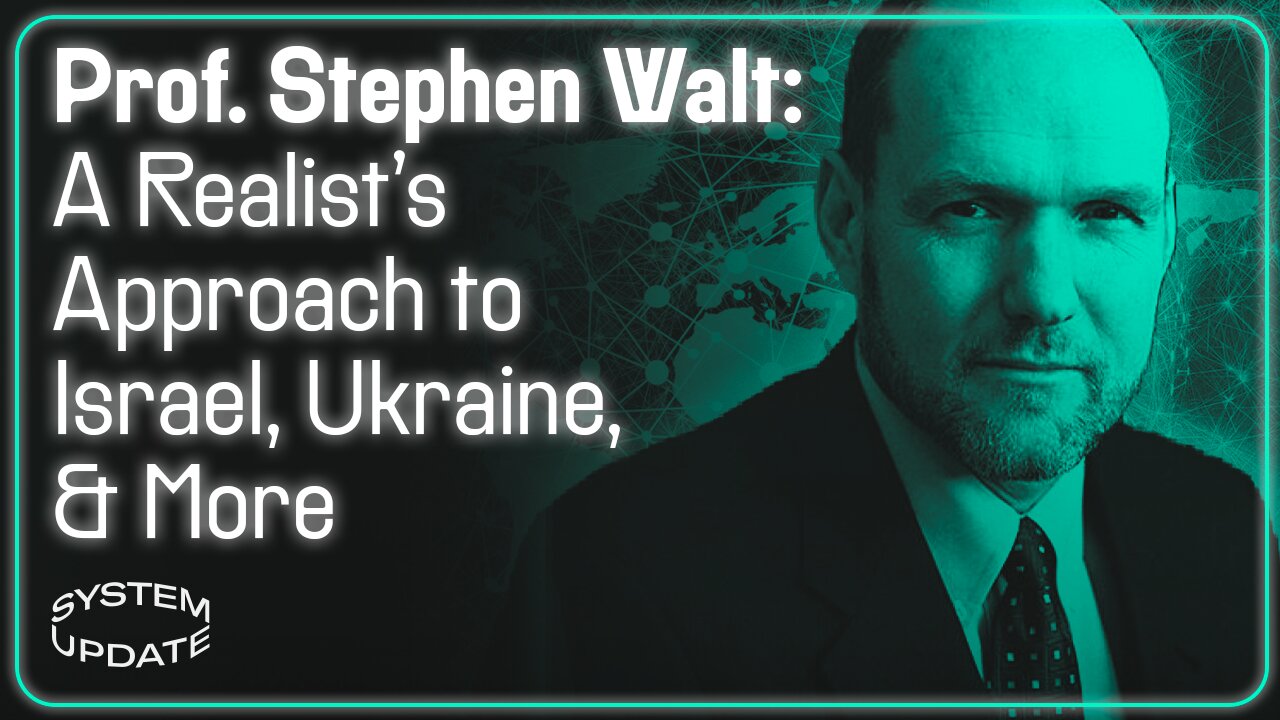
Last June, we interviewed Professor John Mearsheimer, who is widely heralded as one of the most influential foreign policy scholars in his field. He is the Wendell Harrison Distinguished Service Professor of International Relations at the University of Chicago, and the co-author, along with Professor Stephen Walt, who we also just had on our show, of the 2006 book “The Israel Lobby,” which seeks to explain why steadfast support for Israel has been a bipartisan policy in Washington for decades. 
placeholder
 

That interview with Prof. Mearsheimer became one of our most watched programs, in part because he brings such a necessary counterbalance to the predominant narrative about US foreign policy— challenging the establishment consensus that we should fight one war after the next. It was focused on the war in Ukraine, our relationship with China, the threat of multipolarity, and whether it will replace U.S. hegemony. This time, we focused on the new war between Israel and Gaza, the U.S. support for that war, as well as some recent updates on the war in Ukraine and how these two wars interact. 

placeholder
 

Professor Mearsheimer offered an interesting perspective on how we ought to think about American foreign policy as we now are involved in two major wars, with risk of escalation in each, and the reasons why America seems instinctively—every time a new war is offered—to involve itself in it. This discussion was genuinely illuminating. 


READ THE FULL STORY HERE

WATCH THE EPISODE:

placeholder


TUESDAY, OCTOBER 31 - LOCALS Q&A 

FULL AFTER SHOW: Glenn Responds to Viewer Critiques on Our Israel-Gaza Coverage

UNLOCKED: Supporters-Only After Show on Locals

On Tuesday, we unlocked one of our Supporters-Only Q&As from Locals, in which Glenn engages with real audience feedback/criticism to both connect with our viewers and constantly improve the journalism we produce.

On this episode, Glenn—and his canine co-hosts Kane and Sylvester—respond to audience critiques of our Israel-Gaza coverage.


These Supporters-Only After Shows stream LIVE every Tuesday and Thursday following our show on Rumble. Want to join us? Get exclusive access to these shows—and other perks—by becoming a Locals supporter here.

WATCH THE EPISODE:

placeholder


WEDNESDAY, NOVEMBER 1 - SYSTEM UPDATE 174

Interview With Roger Waters: Musical Genius, Political Activist, Accused Anti-Semite

A global rockstar and musical genius. A committed political activist and fierce critic of U.S. global policy. An accused antisemite. Roger Waters joins us for a wide-ranging, fascinating discussion on his life, career, and worldview.

The musician Roger Waters doesn't need much of an introduction. His band, Pink Floyd, is one of the most successful and influential in the history of rock. Albums like “The Dark Side of the Moon” and “The Wall” are among the best-selling and most well-known albums in the last six or seven decades. But Waters is often at least as well-known these days, if not more so, for the political stances he takes. 

He has certainly become an extremely controversial figure, especially over the last couple of years, as he has been an outspoken voice against the U.S. and NATO war in Ukraine and a constant critic of the Israeli occupation of the West Bank and Gaza. He has become widely vilified in Western media circles and establishment institutions of media as being an extremist, as being an antisemite. Essentially, every term that could be cast on him, including pro-Russian and pro-Kremlin, has been applied to him as a means to discredit him.

He was recently in Brazil, including Rio de Janeiro, where he is performing as part of his global tour and we were able to sit down with him in our studio for a fascinating discussion about many different issues, both political and personal. 

We first met when he came to Rio Janeiro in 2018 as part of his tour. I was able, along with my husband, David Miranda, to spend a fair amount of time with him during the week that he was in Rio and got to see a side of him that I think most people don't see, especially those who are subject to the sort of vilification campaign that he has. It shed light for me on how to think about, understand, and process the views of Roger Waters. And I wanted to sit down with him so that those of you who watch the show could hear the same sort of perspective, the same kind of reasoning, and where his views are coming from. 

We spent some amount of time talking about things like the Israeli war in Gaza and the role of the U.S. and the West in supporting it, the ongoing war in Ukraine, and a little bit about the war in Syria, but a lot of it too was about his musical career. We discussed at length the reason why he has decided to enter these very choppy and controversial political waters, and what it is that compelled him. It has resulted in a lot of difficulties for him and career loss, including the loss of a contract with his media company, and criminal investigations in Germany that tried to claim that his performance of The Wall, which was always a satire of tyrannical despots. Germany claimed it was somehow a glorification of Nazism, only for that to spread, including into Brazil, where the Brazilian government warned him that if he came here and tried to perform The Wall with that uniform, he could run afoul of Brazilian law and would have federal police agents at his shows making sure that he complied. The Brazilian government eventually backed off on that.

Roger Waters has been a person who has been kind of a lightning rod on a variety of issues that we cover here in our show, including free debate, the weaponization of antisemitism, and what happens to you when you oppose American wars and Western foreign policy. And I really did not expect the interview to go the way that it did. He was very reflective, very contemplative, and, in a very honest way, oftentimes emotional. It was an interview that I enjoyed conducting. 


READ THE FULL STORY HERE

WATCH THE EPISODE:

placeholder


FRIDAY, NOVEMBER 3 - SYSTEM UPDATE 175

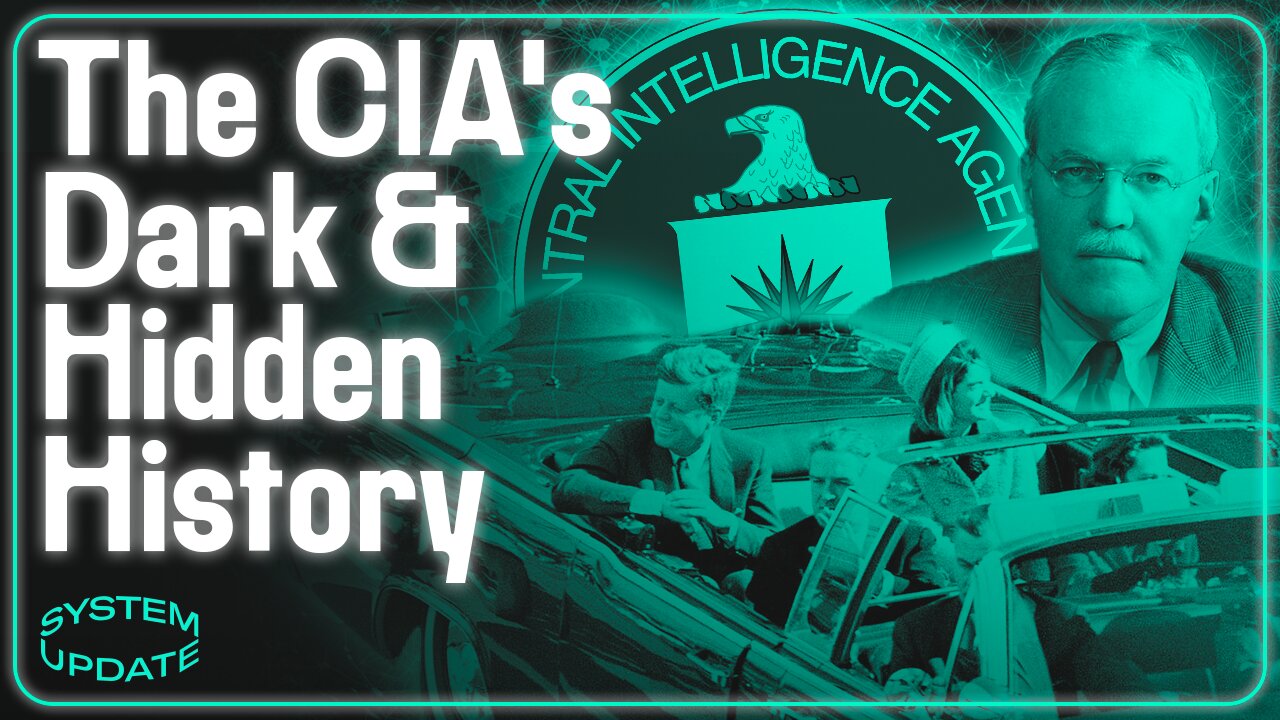
Did the CIA Kill JFK? Leading Expert David Talbot on Allen Dulles, Kennedy’s Assassination, & the Rise of America’s Secret Government

David Talbot, founder of Salon and author of “The Devil’s Chessboard,” explains the rise of the CIA and U.S. security state, his view that they were involved in JFK’s assassination, and much more.

David Talbot is an investigative journalist, historian, and author of “The Devil’s Chessboard”, a book that I consider to be one of the most important ones for anyone interested in understanding more about the history of the U.S. deep state and how it operates. It is the definitive account of the history of the CIA and  U.S. security state, from its creation by Harry Truman to the Leviathan that it is today. 

Talbot also played a significant role in the establishment of the internet as a place for political journalism. He was the founder of the online magazine Salon, which along with Slate was one of the first online political magazines available in the early days of the Internet. With the success of Salon, David Talbot became a crucial figure in democratizing the field of journalism, allowing independent work to reach large audiences without needing The New York Times or NBC. It revolutionized the way in which political journalism could be done online and became Glenn’s journalism home from 2007 until 2012. 

Our discussion largely centered on the content of this book, with David providing evidence for his view that Allen Dulles, the CIA director for nearly a decade who transformed his agency into a secret arm of U.S. government power at home and abroad, was involved in planning and executing the assassination of John F. Kennedy, as a retaliation for having made moves to limit the power and reach of the CIA. The discussion is as interesting and thought-provoking as it sounds.


READ THE FULL STORY MONDAY ON LOCALS.

WATCH THE EPISODE:
placeholder

community logo
Join the Glenn Greenwald Community
To read more articles like this, sign up and join my community today
5
What else you may like…
Videos
Podcasts
Posts
Articles
Howard Lutnick's Blatant Lies About Epstein Ties
00:22:04
System Update's schedule: and my life as a "farmer"

As we have the last couple of years, we are going to take the break from Christmas until New Year off from the show, returning on Monday, January 5. We very well may have individual video segments we post to Rumble and YouTube until then, but the full show at its regular hour will resume on January 6.

In the meantime, enjoy this video we produced of my fulfillment this year of a childhood dream: to have a (very) small farm where my family can go to make communion and connection with every type of animal possible.

00:05:18
SPECIAL AFTERSHOW - SYSTEM UPDATE 500
01:07:46
Listen to this Article: Reflecting New U.S. Control of TikTok's Censorship, Our Report Criticizing Zelensky Was Deleted

For years, U.S. officials and their media allies accused Russia, China and Iran of tyranny for demanding censorship as a condition for Big Tech access. Now, the U.S. is doing the same to TikTok. Listen below.

Listen to this Article: Reflecting New U.S. Control of TikTok's Censorship, Our Report Criticizing Zelensky Was Deleted
February 11, 2026

On Noam Chomsky & Jeffrey Epstein

For people like me who spend a lot of time on Twitter/X, it can appear as though Aaron Maté is currently the only prominent leftist who hasn't jumped on the anti-Chomsky bandwagon, where everyone embraces the darkest interpretation possible of every photo and email fragment in the Epstein files.

People in this camp include Vijay Prashad, Chris Hedges, Alan MacCleod, Aaron's colleague Max Blumenthal, and Briahna Joy Gray, who titled an interview with MacCleod with this salacious headline on YouTube: "Chomsky FANTASIZED About Epstein's Island."

But not all leftist writers and intellectuals utilize social media to promote their work; a mistake in my opinion, as it means they have less visibility. So far, I have found 3 essays by such writers/thinkers, which I find highly worthwhile in their good-faith, nuanced approach to the story, and deserving of wider circulation. I strongly recommend reading/listening to each one:

1 - "Chomsky and Epstein: What the Evidence Shows," ...

post photo preview

Ah this is brilliant Bassem Youssef takes Durshowitz apart on Piers Morgan! 🤣🤣🤣.....

TPUSA 2.0: Why Charlie Kirk Had to Die (Allegedly)

NEW: Message from Glenn to Locals Members About Substack, System Update, and Subscriptions

Hello Locals members:

I wanted to make sure you are updated on what I regard as the exciting changes we announced on Friday night’s program, as well as the status of your current membership.

As most of you likely know, we announced on our Friday night show that that SYSTEM UPDATE episode would be the last one under the show’s current format (if you would like to watch it, you can do so here). As I explained when announcing these changes, producing and hosting a nightly video-based show has been exhilarating and fulfilling, but it also at times has been a bit draining and, most importantly, an impediment to doing other types of work that have always formed the core of my journalism: namely, longer-form written articles and deep investigations.

We have produced three full years of SYSTEM UPDATE episodes on Rumble (our premiere show was December 10, 2022). And while we will continue to produce video content similar to the kinds of segments that composed the show, they won’t be airing live every night at 7:00 p.m. Eastern, but instead will be posted periodically throughout the week (as we have been doing over the last couple of months both on Rumble and on our YouTube channel here).

To enlarge the scope of my work, I am returning to Substack as the central hub for my journalism, which is where I was prior to launching SYSTEM UPDATE on Rumble. In addition to long-form articles, Substack enables a wide array of community-based features, including shorter-form written items that can be posted throughout the day to stimulate conversation among members, a page for guest writers, and new podcast and video features. You can find our redesigned Substack here; it is launching with new content on Monday.

For our current Locals subscribers, you can continue to stay at Locals or move to Substack, whichever you prefer. For any video content and long-form articles that we publish for paying Substack members, we will cross-post them here on Locals (for members only), meaning that your Locals subscription will continue to give you full access to our journalism. 

When I was last at Substack, we published some articles without a paywall in order to ensure the widest possible reach. My expectation is that we will do something similar, though there will be a substantial amount of exclusive content solely for our subscribers. 

We are working on other options to convert your Locals membership into a Substack membership, depending on your preference. But either way, your Locals membership will continue to provide full access to the articles and videos we will publish on both platforms.

Although I will miss producing SYSTEM UPDATE on a (more or less) nightly basis, I really believe that these changes will enable the expansion of my journalism, both in terms of quality and reach. We are very grateful to our Locals members who have played such a vital role over the last three years in supporting our work, and we hope to continue to provide you with true independent journalism into the future.

— Glenn Greenwald   

Read full Article
post photo preview
Amazon's Ring and Google's Nest Unwittingly Reveal the Severity of the U.S. Surveillance State
Just a decade after a global backlash was triggered by Snowden reporting on mass domestic surveillance, the state-corporate dragnet is stronger and more invasive than ever.

That the U.S. Surveillance State is rapidly growing to the point of ubiquity has been demonstrated over the past week by seemingly benign events. While the picture that emerges is grim, to put it mildly, at least Americans are again confronted with crystal clarity over how severe this has become.


The latest round of valid panic over privacy began during the Super Bowl held on Sunday. During the game, Amazon ran a commercial for its Ring camera security system. The ad manipulatively exploited people’s love of dogs to induce them to ignore the consequences of what Amazon was touting. It seems that trick did not work.


The ad highlighted what the company calls its “Search Party” feature, whereby one can upload a picture, for example, of a lost dog. Doing so will activate multiple other Amazon Ring cameras in the neighborhood, which will, in turn, use AI programs to scan all dogs, it seems, and identify the one that is lost. The 30-second commercial was full of heart-tugging scenes of young children and elderly people being reunited with their lost dogs.


But the graphic Amazon used seems to have unwittingly depicted how invasive this technology can be. That this capability now exists in a product that has long been pitched as nothing more than a simple tool for homeowners to monitor their own homes created, it seems, an unavoidable contract between public understanding of Ring and what Amazon was now boasting it could do.


Amazon’s Super Bowl ad for Ring and its “Search Party” feature.


Many people were not just surprised but quite shocked and alarmed to learn that what they thought was merely their own personal security system now has the ability to link with countless other Ring cameras to form a neighborhood-wide (or city-wide, or state-wide) surveillance dragnet. That Amazon emphasized that this feature is available (for now) only to those who “opt-in” did not assuage concerns.


Numerous media outlets sounded the alarm. The online privacy group Electronic Frontier Foundation (EFF) condemned Ring’s program as previewing “a world where biometric identification could be unleashed from consumer devices to identify, track, and locate anything — human, pet, and otherwise.”


Many private citizens who previously used Ring also reacted negatively. “Viral videos online show people removing or destroying their cameras over privacy concerns,” reported USA Today. The backlash became so severe that, just days later, Amazon — seeking to assuage public anger — announced the termination of a partnership between Ring and Flock Safety, a police surveillance tech company (while Flock is unrelated to Search Party, public backlash made it impossible, at least for now, for Amazon to send Ring’s user data to a police surveillance firm).


The Amazon ad seems to have triggered a long-overdue spotlight on how the combination of ubiquitous cameras, AI, and rapidly advancing facial recognition software will render the term “privacy” little more than a quaint concept from the past. As EFF put it, Ring’s program “could already run afoul of biometric privacy laws in some states, which require explicit, informed consent from individuals before a company can just run face recognition on someone.”


Those concerns escalated just a few days later in the context of the Tucson disappearance of Nancy Guthrie, mother of long-time TODAY Show host Savannah Guthrie. At the home where she lives, Nancy Guthrie used Google’s Nest camera for security, a product similar to Amazon’s Ring.


Guthrie, however, did not pay Google for a subscription for those cameras, instead solely using the cameras for real-time monitoring. As CBS News explained, “with a free Google Nest plan, the video should have been deleted within 3 to 6 hours — long after Guthrie was reported missing.” Even professional privacy advocates have understood that customers who use Nest without a subscription will not have their cameras connected to Google’s data servers, meaning that no recordings will be stored or available for any period beyond a few hours.


For that reason, Pima County Sheriff Chris Nanos announced early on “that there was no video available in part because Guthrie didn’t have an active subscription to the company.” Many people, for obvious reasons, prefer to avoid permanently storing comprehensive daily video reports with Google of when they leave and return to their own home, or who visits them at their home, when, and for how long.


Despite all this, FBI investigators on the case were somehow magically able to “recover” this video from Guthrie’s camera many days later. FBI Director Kash Patel was essentially forced to admit this when he released still images of what appears to be the masked perpetrator who broke into Guthrie’s home. (The Google user agreement, which few users read, does protect the company by stating that images may be stored even in the absence of a subscription.)


While the “discovery” of footage from this home camera by Google engineers is obviously of great value to the Guthrie family and law enforcement agents searching for Guthrie, it raises obvious yet serious questions about why Google, contrary to common understanding, was storing the video footage of unsubscribed users. A former NSA data researcher and CEO of a cybersecurity firm, Patrick Johnson, told CBS: “There's kind of this old saying that data is never deleted, it's just renamed.” 


Image obtained through Nancy Guthrie’s unsubscribed Google Nest camera and released by the FBI.


It is rather remarkable that Americans are being led, more or less willingly, into a state-corporate, Panopticon-like domestic surveillance state with relatively little resistance, though the widespread reaction to Amazon’s Ring ad is encouraging. Much of that muted reaction may be due to a lack of realization about the severity of the evolving privacy threat. Beyond that, privacy and other core rights can seem abstract and less of a priority than more material concerns, at least until they are gone.


It is always the case that there are benefits available from relinquishing core civil liberties: allowing infringements on free speech may reduce false claims and hateful ideas; allowing searches and seizures without warrants will likely help the police catch more criminals, and do so more quickly; giving up privacy may, in fact, enhance security.


But the core premise of the West generally, and the U.S. in particular, is that those trade-offs are never worthwhile. Americans still all learn and are taught to admire the iconic (if not apocryphal) 1775 words of Patrick Henry, which came to define the core ethos of the Revolutionary War and American Founding: “Give me liberty or give me death.” It is hard to express in more definitive terms on which side of that liberty-versus-security trade-off the U.S. was intended to fall.


These recent events emerge in a broader context of this new Silicon Valley-driven destruction of individual privacy. Palantir’s federal contracts for domestic surveillance and domestic data management continue to expand rapidly, with more and more intrusive data about Americans consolidated under the control of this one sinister corporation.


Facial recognition technology — now fully in use for an array of purposes from Customs and Border Protection at airports to ICE’s patrolling of American streets — means that fully tracking one’s movements in public spaces is easier than ever, and is becoming easier by the day. It was only three years ago that we interviewed New York Timesreporter Kashmir Hill about her new book, “Your Face Belongs to Us.” The warnings she issued about the dangers of this proliferating technology have not only come true with startling speed but also appear already beyond what even she envisioned.


On top of all this are advances in AI. Its effects on privacy cannot yet be quantified, but they will not be good. I have tried most AI programs simply to remain abreast of how they function.


After just a few weeks, I had to stop my use of Google’s Gemini because it was compiling not just segregated data about me, but also a wide array of information to form what could reasonably be described as a dossier on my life, including information I had not wittingly provided it. It would answer questions I asked it with creepy, unrelated references to the far-too-complete picture it had managed to create of many aspects of my life (at one point, it commented, somewhat judgmentally or out of feigned “concern,” about the late hours I was keeping while working, a topic I never raised).


Many of these unnerving developments have happened without much public notice because we are often distracted by what appear to be more immediate and proximate events in the news cycle. The lack of sufficient attention to these privacy dangers over the last couple of years, including at times from me, should not obscure how consequential they are.


All of this is particularly remarkable, and particularly disconcerting, since we are barely more than a decade removed from the disclosures about mass domestic surveillance enabled by the courageous whistleblower Edward Snowden. Although most of our reporting focused on state surveillance, one of the first stories featured the joint state-corporate spying framework built in conjunction with the U.S. security state and Silicon Valley giants.


The Snowden stories sparked years of anger, attempts at reform, changes in diplomatic relations, and even genuine (albeit forced) improvements in Big Tech’s user privacy. But the calculation of the U.S. security state and Big Tech was that at some point, attention to privacy concerns would disperse and then virtually evaporate, enabling the state-corporate surveillance state to march on without much notice or resistance. At least as of now, the calculation seems to have been vindicated.

Read full Article
Netanyahu Visits Trump for the Seventh Time Amid More Threats of a U.S. Attack on Iran
Will the U.S. Government base its policies toward Iran on its own interests, or fight a pointless but costly war against Israel's prime enemy in the Middle East?

Israeli Prime Minister Benjamin Netanyahu has by far spent more time with President Trump than with any other world leader. Netanyahu, on Wednesday, will make his seventh visit to the U.S. since Trump’s second term began a little over a year ago, on top of the visit to Israel made by Trump in October. No other leader has visited the White House during Trump’s second term more than twice. The duo will once again meet at the White House.

The Israeli leader is traveling to Washington this time in order to impose as onerous conditions as possible on Trump’s desire to sign a deal with Iran that would avert a second U.S. attack on that country in the last eight months. “I will present to the President our positions regarding the principles of the negotiations,” Netanyahu saidbefore boarding his presidential plane this morning.

In June, Trump ordered the U.S. military to bomb several of Iran’s underground enrichment facilities in the midst of Israel’s 12-day bombing campaign. After those strikes, Trump pronounced Iran’s nuclear facilities “completely and totally obliterated.”

Yet over the past two months, Trump has ordered the deployment of what he called a “massive armada,” led by the aircraft carrier USS Abraham Lincoln, headed to Iran. On Truth Social, Trump emphasized that the deployment of military assets to Iran is larger than what he sent to Venezuela prior to the removal of that country’s president by the U.S. military. Trump added: “Like with Venezuela, [the U.S. armada] is ready, willing, and able to rapidly fulfill its mission, with speed and violence, if necessary.”

Indeed, Trump has explicitly and repeatedly threatened Tehran with “violence” and “very steep” consequences in the event that the two countries fail to reach a long-term agreement governing Iran’s nuclear program — the same one that Trump insisted had been “obliterated” last June.


Trump stated over the weekend that he believes negotiations with Iran are going “very well,” arguing that “they want a deal very badly.” Numerous reports have suggested that Trump’s strong desire for an agreement instead of war has put him at odds not only with many of his most hawkish pro-Israel advisers, but also with Netanyahu. Today’s trip is thus being depicted as one between two leaders who have very different views of how Iran should be dealt with, thus implying that Netanyahu’s trip is an act of desperation to prevent Trump from reaching peace with Israel’s arch-nemesis.

All of that might be encouraging if not for the fact that this was the exact playbook run by Israel and the U.S. prior to their last joint bombing campaign on Iran. In the weeks leading up to Israel’s surprise attack, Trump had repeatedly assured the public, and Iran, that he believed negotiations were rapidly progressing to a deal that would render unnecessary military conflict with Iran.

And, just as now, coordinated leaks — typically laundered through Axios’ always-helpful Barak Ravid, the former IDF soldier who served in Israel’s notorious intelligence Unit 8200 — depicted a major rift between the two leaders as a result of Trump’s refusal to sanction a war with Iran. It seems clear that last year’s reports of a major “rift” were designed to lower Iran’s guard against what Trump ultimately acknowledged was a jointly planned U.S./Israel attack.


The supposed “dispute” between Washington and Tel Aviv this time rests on the scope of the deal with Iran. Israel’s fiercest loyalists in the U.S. have been demanding that Trump send the U.S. military to achieve Netanyahu’s longest and most supreme goal: having the U.S. military impose regime change on Israel’s most formidable regional enemy and replace it with a pliable puppet.

The sudden outbreak of deep concern over the human rights of Iranian protesters, from the same crowd that has cheered on every U.S. and Israeli war for decades, was quite obviously intended to provoke and even force a U.S. war to dislodge the Iranian government from power. This ritual is depressingly familiar to anyone paying even minimal attention to U.S. wars over the last several decades.

As I have long documented, feigned concern for oppressed peoples is always the tactic of choice for Washington’s neocons and warmongers. When they were trying in 2005 to force former President George W. Bush to go “from Baghdad to Tehran” on what was intended to be his regime-change crusade against Israel’s enemies, Americans were suddenly subjected to stories about the cruel and abusive treatment of Iranian gay men, as if that were a motivating factor in agitating for regime change there. (Similar concerns are rarely, if ever, expressed about the at least equally repressive behavior of friendly governments in Saudi Arabia, UAE, Egypt, Uganda — all governments which the U.S. actively supports.)

What Israel and its American supporters most fear is a U.S. deal with Iran that will only resolve the question of Iran’s nuclear program, while leaving the current government in place. But the position of the U.S. government and of President Trump has long been that the threat posed to the U.S. by Iran comes from the development of an Iranian nuclear weapon. By Trump’s own repeatedly stated views, that is the only legitimate concern of the U.S. when it comes to Iran.

But Israel has a far more ambitious agenda when it comes to that country. For that reason, Israel — as it did last June — is demanding the imposition of pre-conditions on Iran to which Israel knows Iran would and could never agree.

As the Israeli journalist Guy Azriel reported this week: “Despite the apparent lack of tangible progress in the Iran talks over the weekend and the unresolved gaps between Washington and Tehran, concern is growing in Jerusalem over the trajectory of the U.S.-led negotiations[.] … In Israel, there is mounting fear that any emerging deal could fall short of addressing the country’s core demands, not only regarding Iran’s regional terror proxies, but above all its ballistic missile program.”

In other words, Israel is demanding that the U.S. go to war with Iran even if Tehran satisfies Trump’s demands on its nuclear program. Netanyahu is insisting that Trump also require Iran to give up its ballistic missiles before any deal can be signed: something no country would ever do.

It may be rational for Israel to wish that their main regional rivals were left completely defenseless against any possible Israeli attack. President Trump himself admitted that Iran’s ballistic missiles were used to great effect to retaliate against Israel for its attack last June: “Israel got hit very hard, especially the last couple of days. Israel was hit really hard,” the President said, adding, “Those ballistic missiles, boy, they took out a lot of buildings.”

But what does that desire have to do with the United States? And why would any country, let alone Iran — which was just heavily bombed for almost two weeks last June — agree to give up conventional weapons that serve as a deterrent for future Israeli attacks?

Despite the best propaganda efforts of the Ellison-owned, Bari Weiss-led CBS News to convince Americans that Iran’s ballistic missiles somehow pose a threat to the U.S. rather than just Israel, the reality is that Iran cannot and does not pose a threat to the U.S., particularly if there is an agreement in place to ensure Iran cannot produce nuclear weapons (such an agreement had been in place that, by all accounts, provided a comprehensive inspection regime at Iranian facilities before it was nullified in 2017 by the U.S.).

The very idea that the U.S. should even consider sending its own citizens to fight a war against Iran is the consummate example of Israel having Americans fight wars that serve Israel’s national interest but not Americans’ interests. In the days leading up to Netanyahu’s latest in a series of visits to the U.S., Israeli officials began publicly threatening that they would attack Iran on their own if Trump refused to do it for them.


If Israel actually wants war with Iran, Israel can go fight it itself. Invite their most impassioned, loudmouthed American advocates, such as Mark Levin and Sen. Lindsey Graham (R-S.C.), to join that fight. But leave the U.S. out of it.

The towering question, as always, is how much Trump is actually willing to defy not only Israel but his top Israel-centered donors and advisors, such as Miriam Adelson and Stephen Miller. The record on that front has been quite poor thus far. One once again watches to see whether the U.S. will make policy and war decisions not based on its own interests but on the interests of this one foreign country.

Read full Article
See More
Available on mobile and TV devices
google store google store app store app store
google store google store app tv store app tv store amazon store amazon store roku store roku store
Powered by Locals